

How to Avoid Sizing Issues With Custom Gifts
Table of Contents
- Why Sizing Issues Are the Top Reason Custom Gifts Get Returned
- Step 1: Measure the Recipient Accurately
- Step 2: How to Ask for Clothing Size for Gifts Without Ruining the Surprise
- Step 3: Choose the Right Custom Apparel Size Chart Guide
- Unisex vs. Fitted Shirt Sizing: What's the Difference?
- Step 4: Plan Ahead and Verify Before Ordering
- Step 5: Know Your Exchange and Return Policies
- Common Sizing Mistakes to Avoid
- Frequently Asked Questions
Last Updated: September 3, 2026
Why Sizing Issues Are the Top Reason Custom Gifts Get Returned
Sizing problems are the silent killer of custom gift giving. When you order personalized apparel as a gift, you're betting on a single measurement, and if you get it wrong, the recipient ends up with something unwearable.
According to Coresight Research's analysis of apparel returns, 53% of all apparel returns are due to size and fit issues. U.S. apparel returns cost $38 billion annually, with $25 billion attributed to processing costs alone (peer-reviewed research).
The good news? Sizing issues are preventable. They're not random bad luck, they result from skipping steps, misreading size charts, or not asking the right questions upfront. This guide walks you through exactly how to avoid sizing issues with custom gifts, from measuring correctly to handling exchanges if something doesn't fit.
Step 1: Measure the Recipient Accurately
The foundation of every well-fitting custom gift is an accurate measurement. You can't guess, estimate based on appearance, or assume that a size medium is the same across all brands.
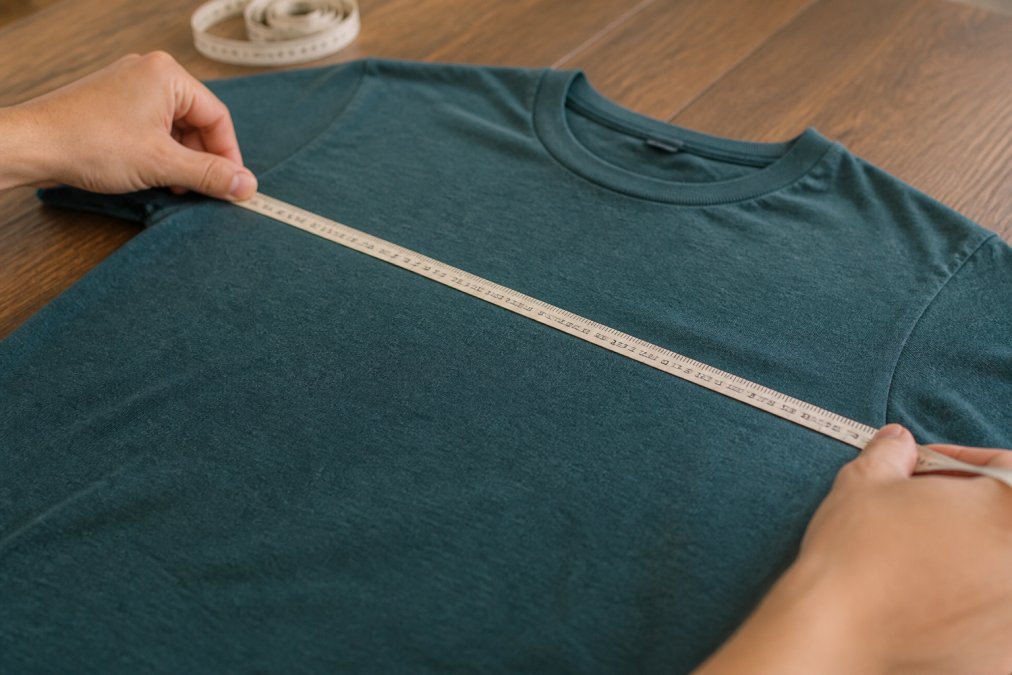
Taking body measurements at home
Start with a garment the recipient already owns and loves. Lay it flat on a clean surface. Measure chest width from seam to seam (one side only). Measure length from the shoulder seam down to the hem. For fitted styles, also measure sleeve length from the center back neck to the wrist.
If you don't have a reference garment, measure the person directly while they stand relaxed. Use a soft measuring tape, not a rigid ruler. For chest measurement, wrap the tape around the fullest part of the chest, keeping it parallel to the ground and snug but not tight, you should fit one finger under the tape. For length, measure from the top of the shoulder down to where they want the shirt to end. Write everything down immediately.
Understanding body measurements vs. garment measurements
Body measurements are taken directly from the person's body. Garment measurements are taken from the finished piece of clothing laid flat. A shirt labeled as fitting a 40-inch chest might have a garment chest measurement of 42 or 44 inches, because brands build in room for movement and comfort.
A slim-fit shirt might have only 2 inches of extra room. A standard-fit shirt might have 4 inches. An oversized style could have 6 or more. This is why two shirts labeled "medium" can fit completely differently.
When you order from Urban Echo Tees or any custom apparel vendor, always reference the garment measurements provided on the size chart, not your body measurements.
Step 2: How to Ask for Clothing Size for Gifts Without Ruining the Surprise
You need sizing information, but you don't want to telegraph that a gift is coming.
Indirect ways to gather size information
Ask a mutual friend or family member. Frame it casually: "Hey, do you know if [person] wears a medium or large in T-shirts?"
Reference a recent purchase. "You mentioned getting new shirts last week, what size did you end up getting?"
Check their closet if you visit. Look at tags on shirts they wear frequently and jot down the size.
Ask about a gift they've received. "Do you still have that shirt your mom gave you last year? Does it fit well?"
Using sizing confirmation templates
If you ask directly, use a sizing confirmation template:
Hi! I'm ordering something custom and want to make sure it fits perfectly. Can you help me out with a few quick measurements? I need:
- Chest width (measure across the widest part, side to side, not all the way around)
- Length (shoulder to where you like shirts to end)
- Sleeve length (center back neck to wrist)
Or, if that's too much, just let me know what size you typically wear in T-shirts or button-ups.
Step 3: Choose the Right Custom Apparel Size Chart Guide
Every vendor's size chart is different. Urban Echo Tees provides detailed sizing information, but so does every other apparel company, and they don't all agree.
Reading size charts correctly
-
Locate the row for the size you're considering. Look at the actual garment measurements in inches or centimeters, not just the label.
-
Compare garment measurements to body measurements plus ease. If your recipient has a 38-inch chest and you're looking at a medium that measures 42 inches across, that's 4 inches of ease, appropriate for a standard-fit shirt.
-
Check the length. A shirt that's the right width but 2 inches too long will look sloppy.
-
Note the fit description. The chart should tell you whether this is a standard fit, slim fit, oversized, or unisex cut.
-
Look for customer reviews mentioning fit. Search for comments like "runs small" or "true to size."
Sizing line-ups and fit labels
The best size charts include sizing line-ups: photos of real people wearing different sizes with their height and weight listed. Find the person closest to your recipient's build.
Fit labels tell you how much room to expect:
- Standard Fit: Relaxed through the chest and torso. Has 4-6 inches of ease.
- Semi-Fitted: Closer to the body than standard but not tight. Has 2-4 inches of ease.
- Slim Fit: Tailored closer to the body. Has 1-2 inches of ease. Requires accurate sizing.
- Oversized: Intentionally loose and relaxed. Has 6+ inches of ease.
Unisex vs. Fitted Shirt Sizing: What's the Difference?
Unisex sizing is cut the same for all genders. It's typically a straight cut from shoulder to hem, with a relaxed fit through the torso. Unisex shirts tend to run larger and looser.
Fitted sizing (often labeled as "women's fit" or "fitted") is cut narrower at the waist and often shorter in length. The armholes are typically smaller, and the overall silhouette is more tailored.
A fitted small might actually fit someone better than a unisex medium, even though the label number is smaller. You can't assume which style your recipient prefers. If you're unsure, ask your recipient what fit they prefer, or mention that you're choosing between unisex and fitted and ask which they'd rather have.
Step 4: Plan Ahead and Verify Before Ordering
Rushing is the enemy of good custom gifts. The longer your timeline, the more flexibility you have to catch and correct mistakes.
Collecting size data early
Don't wait until three days before you need the gift to start gathering measurements. Collect sizing information weeks in advance and store it somewhere safe. Early collection gives you time to follow up if something seems off before you order.
Allowing time for production and customization
Custom apparel takes longer than off-the-shelf clothing. Production can take 2-5 business days, then 5-10 business days for standard shipping (narvar.com). Most orders arrive about 7-15 business days after purchase. Add shipping time on top of that.
If you need a gift by a specific date, work backward. If the deadline is December 20 and production takes 3 weeks plus 5 days shipping, you need to order by November 22. Build in a buffer for potential issues.
Step 5: Know Your Exchange and Return Policies
Even with all this planning, sometimes things don't fit. You need to know exactly what your options are before you order.
Before you order, find the return and exchange policy and read it completely. Look for:
- Return window: How many days do you have to initiate a return or exchange?
- Condition requirements: Does the item need to be unworn? Unwashed? With tags attached?
- Who pays for return shipping: Does the vendor cover it, or do you?
- Restocking fees: Is there a fee to process the return or exchange?
- Exchange vs. return: Can you exchange for a different size, or do you have to return for a refund?
| Policy Element | What to Look For | Why It Matters |
|---|---|---|
| Return window | 30 days minimum | Gives time to assess fit and initiate exchange |
| Condition requirements | Unworn preferred; unwashed acceptable | Determines if a tried-on shirt can be exchanged |
| Return shipping | Vendor-paid is best | Reduces friction for recipient to exchange |
| Exchange option | Direct size swap preferred | Faster than return-and-repurchase cycle |
| Restocking fees | Avoid if possible | Adds cost to an already expensive mistake |
Common Sizing Mistakes to Avoid
Mistake 1: Assuming all mediums fit the same. Always check the actual garment measurements, not just the label size.
Mistake 2: Measuring over clothing. Measure directly on skin or a thin layer.
Mistake 3: Not accounting for shrinkage. Cotton shrinks, especially if washed in hot water or dried. Size up slightly or provide care instructions.
Mistake 4: Ignoring the fit label. A slim-fit shirt will fit completely differently from a standard-fit shirt, even in the same size.
Mistake 5: Ordering at the last minute. Rushing forces you to guess on sizing and leaves no time to catch errors.
Mistake 6: Not asking for help. If you're unsure about sizing, ask the vendor. Urban Echo Tees's customer support team can help you interpret size charts.
Mistake 7: Forgetting to verify before finalizing. Before you hit "confirm order," double-check that the size, fit, and measurements are correct.
Mistake 8: Ordering without a size chart. If a product doesn't provide detailed sizing information, that's a red flag.
Sizing issues with custom gifts are entirely preventable. The difference between a gift that fits perfectly and one that ends up in a donation pile comes down to preparation: measuring accurately, asking the right questions, choosing the right size based on actual garment measurements, and understanding fit labels. Start early, verify everything before you order, and know the return policy just in case.
At Urban Echo Tees, we help you create custom apparel that fits because we know how much it matters. Our detailed size charts and responsive customer support team make it easier to choose the right size. Tools that help you visualize fit and verify sizing before ordering can reduce return rates.
=== FAQ ANSWERS (audit these too, same rules) ===
[1] Q: How do I determine the right size for a custom apparel gift? A: Start by measuring the recipient's body dimensions (chest, shoulder width, sleeve length) using a soft measuring tape. Compare these measurements to the custom apparel size chart guide provided by the retailer. If the recipient falls between sizes, especially in semi-fitted or slim styles, size up, roomy gets worn; tight stays in the drawer. Check the fit label (standard fit, semi-fitted, slim) since the same size wears differently depending on the cut. When in doubt, ask indirectly by checking their closet or messaging a mutual friend.
[2] Q: What should I do if a custom gift doesn't fit the recipient? A: Contact customer support immediately and check the exchange policy before ordering. Urban Echo Tees does not accept returns or exchanges for sizing preference or change of mind, as each item is made to order. However, if your order arrives damaged, defective, or incorrect, you should email Urban Echo Tees at nareeza77@gmail.com within 30 days of delivery with your order number and a clear photo of the issue for a replacement or refund.
[3] Q: How do I ask for someone's clothing size without ruining the surprise? A: Use indirect methods: check the tags on clothing they already own, ask a family member or close friend casually, or mention you're doing a clothing inventory and need their size. Another approach is to frame it as needing their size for a future occasion (without specifying the gift). For group orders, send a sizing confirmation template via email or text that feels routine rather than gift-related. Keep the conversation brief and natural to avoid raising suspicion.
[4] Q: Do unisex and fitted custom shirts have different sizing standards? A: Yes. Unisex shirts typically run larger and roomier through the torso and shoulders, while fitted shirts are cut closer to the body. A person who wears a medium in a fitted style may need a small or medium in a unisex cut. Always check the specific size chart for the fit style you're ordering, as the same size letter (M, L, XL) can vary significantly between unisex and fitted options. This is one of the biggest sources of sizing confusion, so comparing measurements to the actual garment dimensions is critical.
Frequently Asked Questions
How do I determine the right size for a custom apparel gift?
Start by measuring the recipient's body dimensions (chest, shoulder width, sleeve length) using a soft measuring tape. Compare these measurements to the custom apparel size chart guide provided by the retailer. If the recipient falls between sizes, especially in semi-fitted or slim styles, size up, roomy gets worn; tight stays in the drawer. Check the fit label (standard fit, semi-fitted, slim) since the same size wears differently depending on the cut. When in doubt, ask indirectly by checking their closet or messaging a mutual friend.
What should I do if a custom gift doesn't fit the recipient?
Contact customer support immediately and check the exchange policy before ordering. Urban Echo Tees does not accept returns or exchanges for sizing preference or change of mind, as each item is made to order. However, if your order arrives damaged, defective, or incorrect, you should email Urban Echo Tees at nareeza77@gmail.com within 30 days of delivery with your order number and a clear photo of the issue for a replacement or refund.
How do I ask for someone's clothing size without ruining the surprise?
Use indirect methods: check the tags on clothing they already own, ask a family member or close friend casually, or mention you're doing a clothing inventory and need their size. Another approach is to frame it as needing their size for a future occasion (without specifying the gift). For group orders, send a sizing confirmation template via email or text that feels routine rather than gift-related. Keep the conversation brief and natural to avoid raising suspicion.
Do unisex and fitted custom shirts have different sizing standards?
Yes. Unisex shirts typically run larger and roomier through the torso and shoulders, while fitted shirts are cut closer to the body. A person who wears a medium in a fitted style may need a small or medium in a unisex cut. Always check the specific size chart for the fit style you're ordering, as the same size letter (M, L, XL) can vary significantly between unisex and fitted options. This is one of the biggest sources of sizing confusion, so comparing measurements to the actual garment dimensions is critical.
This article was written using GrandRanker