

Avoid Wrong Sizes: Custom Sweatshirt Group Orders
Table of Contents
- Why Sizing Matters for Custom Sweatshirt Group Orders
- How to Collect Group Shirt Sizes Accurately
- Custom Sweatshirt Size Chart Template and Standards
- Unisex vs. Fitted Sweatshirt Sizing: What You Need to Know
- Common Mistakes When Ordering Custom Apparel for Groups
- Managing Group Expectations and Fit Preferences
- Verifying Garment Specifications Before You Order
- Conclusion
Last Updated: August 27, 2026
Why Sizing Matters for Custom Sweatshirt Group Orders
Approximately 40% of online purchases are returned, with incorrect sizing being the most common reason (baymard.com). When coordinating apparel for dozens of people, those mistakes multiply fast. Sizing isn't just about measurements, it's about understanding how your group's body types map onto a brand's fit, how fabric behaves after washing, and whether your team expects oversized or fitted silhouettes. A 53% return rate specifically due to size and fit issues shows this is an industry-wide problem (coresight.com).
With the right process, you can reduce returns dramatically and ensure your team actually wants to wear what arrives.
How to Collect Group Shirt Sizes Accurately
Nearly half of U.S. shoppers buy multiple sizes of a product online with the intention of returning the ones that don't fit (nrf.com). Preventing that waste starts with accurate collection.
Using a Pre-Order Survey Form
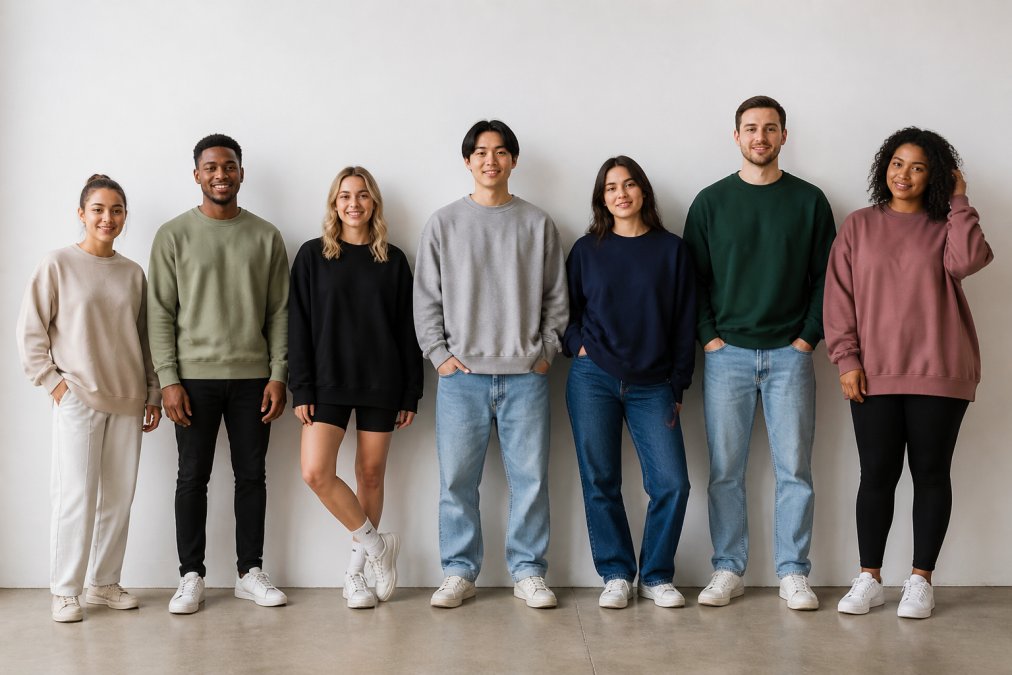
A pre-order survey form is your most reliable tool. Ask for three pieces of information: typical size, height (if available), and whether they prefer fitted or oversized fits. Include a visual size chart from your chosen vendor on the form so people can reference actual measurements while responding.
Keep the form simple, three questions max, to maintain high response rates. Send it through Google Forms or Typeform and set a firm deadline. You'll always have stragglers, but a clear cutoff prevents endless delays.
Direct Measurement vs. Self-Reporting
Direct measurement is more accurate than self-reporting, but it's impractical for large groups. For most group orders, anchor self-reported sizes to actual data by sending people a link to the brand's size chart and asking them to compare their own garments to the measurements listed. If 71% of fit-related returns came from customers who consulted the size chart before purchasing, the problem isn't the chart, it's that people don't use it correctly.
For anyone between sizes, ask them to choose based on whether they prefer a snugger fit or more room to move. Don't let them stay undecided.
Custom Sweatshirt Size Chart Template and Standards
Every brand has its own sizing, so you can't rely on "I wear a Medium" without context.
Understanding Garment Specifications
Garment specifications include chest width (measured flat), length from shoulder to hem, sleeve length, and sometimes sleeve circumference. A chest width of 21 inches might feel roomy to someone used to fitted shirts but snug to someone who prefers oversized wear. Before finalizing your order, pull the actual garment specifications from your vendor and share them with your group.
Typical Size Distribution for Group Orders
For adult groups, a realistic size distribution follows this pattern: Small 5-10%, Medium 25-30%, Large 30-35%, XL 20-25%, 2XL 8-10%, 3XL+ 1-3%. Your specific group might skew differently based on age range and gender composition, but this is a useful baseline.
| Size | Typical % | Adjustment for Smaller Groups | Adjustment for Larger Groups |
|---|---|---|---|
| Small | 5-10% | Round up to 1-2 units | Maintain percentage |
| Medium | 25-30% | 1 per 3-4 people | Scale with group size |
| Large | 30-35% | 1 per 3-4 people | Scale with group size |
| XL | 20-25% | 1 per 4-5 people | Scale with group size |
| 2XL | 8-10% | 1 per 8-10 people | Scale with group size |
| 3XL+ | 1-3% | 0-1 unit | 1 per 25-50 people |
Unisex vs. Fitted Sweatshirt Sizing: What You Need to Know
The choice between unisex and fitted sweatshirts fundamentally changes how you approach sizing. Unisex sweatshirts are cut to fit a wider range of body types with room to spare, while fitted sweatshirts are tapered at the waist and designed to follow body contours. The same person might need a Medium in unisex but a Small in fitted.
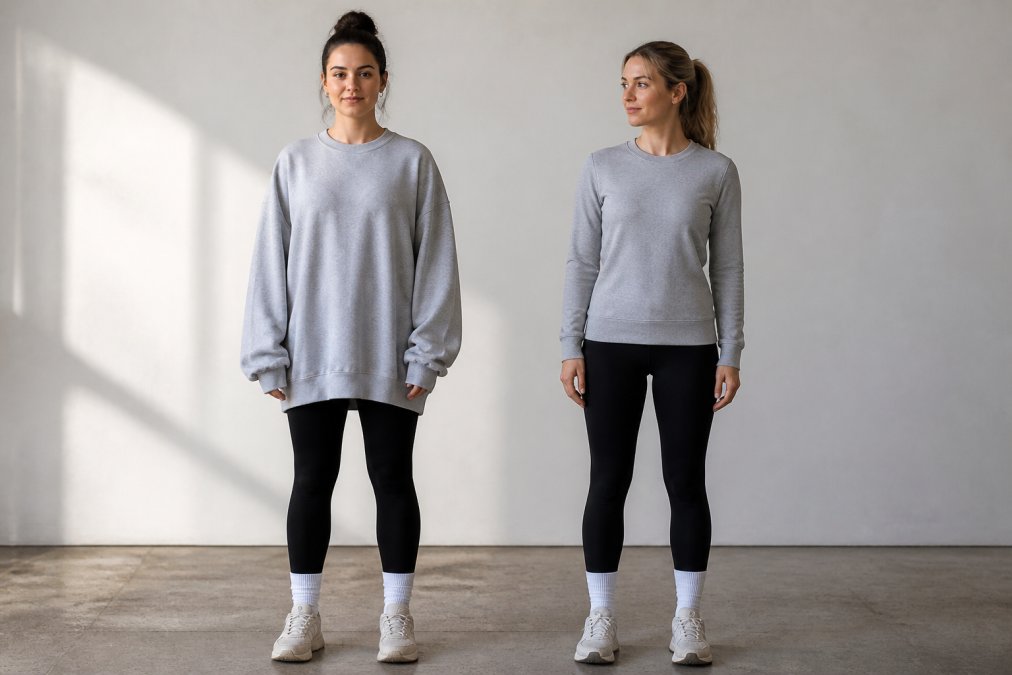
Ask your group which fit they prefer during the survey. If the group is split, you might need to order two different cuts. For a corporate team event, unisex is usually safer and works across a broader range of body types. For a smaller, style-conscious group, fitted might be better.
Common Mistakes When Ordering Custom Apparel for Groups
Ignoring Fabric Shrinkage and Material Composition
A sweatshirt fresh out of the box isn't the same size as it will be after the first wash. A 100% cotton sweatshirt will shrink more than a cotton-poly blend. Ask your vendor for the fabric composition and any known shrinkage rates. If the sweatshirt shrinks 3-5% in length and width, you might need to order up a size for some people or warn them to follow specific washing instructions.
Not Accounting for the Oversized Trend
The oversized trend has changed how people think about fit. If your group is younger or fashion-forward, they're probably expecting oversized proportions. Explicitly ask whether they want the garment to fit true-to-size or oversized. If oversized is the preference, you might need to order down a size or two.
Managing Group Expectations and Fit Preferences
Communicating Fit Variations
Be honest with your group about what they're getting. Share the garment specifications before the order ships, including measurements, fabric content, and expected fit. If you're ordering through a vendor like Urban Echo Tees that offers design customization, discuss design placement and sizing implications. Large designs on the chest can make a garment feel smaller.
Handling Members Between Sizes
Ask people between sizes to choose based on preference: do they want a snugger fit or more room? If they're truly undecided, order the larger size. Document these decisions so people understand their choice was intentional.
Verifying Garment Specifications Before You Order
Checking Mockups and Design Placement
Most custom apparel vendors offer mockup previews. Use them to check design placement, size relative to the garment, and color rendering. Design placement matters for fit perception, a large front design can make a sweatshirt feel tighter than it actually is.
Confirming Final Size Inventory
Before finalizing, create a detailed size breakdown of what you're ordering. Cross-reference this against your survey responses. If ordering through an online store where group members select their own sizes, pull a final report showing exactly what was selected. For in-person or phone orders, send a summary to your vendor and ask them to confirm before production starts.
Getting sizing right for a custom sweatshirt group order requires process and communication. Start by collecting accurate measurements using a survey form tied to the actual brand's size chart. Understand the difference between unisex and fitted cuts and make that choice deliberately. Account for fabric shrinkage and the oversized trend before people order. Verify everything before production starts.
When you order through Urban Echo Tees, you get access to detailed garment specifications, mockup previews, and a team that's handled hundreds of group orders. We'll help you navigate the sizing conversation with your group and catch potential issues before they become problems. Get started with Urban Echo Tees and turn your group apparel project into something everyone actually wants to wear.
=== FAQ ANSWERS (audit these too, same rules) ===
[1] Q: What is the most common reason people get the wrong size when ordering custom sweatshirts online? A: Incorrect sizing is a leading driver of online apparel returns, with size/fit cited by 53% of respondents as the top reason for online apparel returns. Poor fit happens because shoppers either rely on inaccurate size charts (71% of fit-related returns came from customers who consulted the size chart before purchasing), don't account for fabric shrinkage, or misunderstand fit preferences like unisex versus fitted cuts. For group orders, the problem multiplies when sizes are collected through self-reporting without actual measurements or verification against the specific vendor's garment specifications.
[2] Q: How do I collect accurate group shirt sizes for a custom sweatshirt order? A: Use a pre-order survey form that asks members for their typical size, height (if available), and whether they prefer fitted or oversized fits. Provide a custom sweatshirt size chart template specific to the brand you're ordering from, since sizing varies significantly between manufacturers. Consider asking whether each person prefers unisex (looser, oversized) or fitted sizing. Direct measurement is more reliable than self-reporting; if possible, have members measure themselves using a soft tape measure and compare results to the actual garment specifications provided by your supplier.
[3] Q: What should I do if someone in my group is between sizes? A: First, clarify whether the person prefers a snug or loose fit. If they typically size up for comfort, order the larger size. If they prefer fitted apparel, order the smaller size. Some fabrics shrink after washing, so factor in material composition: cotton blends shrink more than polyester blends. Communicate upfront with your group that minor fit variations are normal and that anyone who receives an incorrect size should contact the supplier within their return policy window. Always verify the vendor's exchange or return policy before placing the bulk order.
[4] Q: What is a realistic size breakdown for a large group order? A: For adult groups, a typical size distribution is: Small 5-10%, Medium 25-30%, Large 30-35%, XL 20-25%, 2XL 8-10%, and 3XL+ 1-3%. However, your actual distribution depends on your specific group's demographics. Always collect individual sizes first rather than guessing. If exact sizes aren't available, use this breakdown as a starting point but adjust based on any information you have about your group. Verify your final size inventory with the supplier before payment to avoid over-ordering unpopular sizes and under-ordering popular ones.
Frequently Asked Questions
Q: What is the most common reason people get the wrong size when ordering custom sweatshirts online?
A: Incorrect sizing is a leading driver of online apparel returns, with size/fit cited by 53% of respondents as the top reason for online apparel returns. Poor fit happens because shoppers either rely on inaccurate size charts (71% of fit-related returns came from customers who consulted the size chart before purchasing), don't account for fabric shrinkage, or misunderstand fit preferences like unisex versus fitted cuts. For group orders, the problem multiplies when sizes are collected through self-reporting without actual measurements or verification against the specific vendor's garment specifications.
Q: How do I collect accurate group shirt sizes for a custom sweatshirt order?
A: Use a pre-order survey form that asks members for their typical size, height (if available), and whether they prefer fitted or oversized fits. Provide a custom sweatshirt size chart template specific to the brand you're ordering from, since sizing varies significantly between manufacturers. Consider asking whether each person prefers unisex (looser, oversized) or fitted sizing. Direct measurement is more reliable than self-reporting; if possible, have members measure themselves using a soft tape measure and compare results to the actual garment specifications provided by your supplier.
Q: What should I do if someone in my group is between sizes?
A: First, clarify whether the person prefers a snug or loose fit. If they typically size up for comfort, order the larger size. If they prefer fitted apparel, order the smaller size. Some fabrics shrink after washing, so factor in material composition: cotton blends shrink more than polyester blends. Communicate upfront with your group that minor fit variations are normal and that anyone who receives an incorrect size should contact the supplier within their return policy window. Always verify the vendor's exchange or return policy before placing the bulk order.
Q: What is a realistic size breakdown for a large group order?
A: For adult groups, a typical size distribution is: Small 5-10%, Medium 25-30%, Large 30-35%, XL 20-25%, 2XL 8-10%, and 3XL+ 1-3%. However, your actual distribution depends on your specific group's demographics. Always collect individual sizes first rather than guessing. If exact sizes aren't available, use this breakdown as a starting point but adjust based on any information you have about your group. Verify your final size inventory with the supplier before payment to avoid over-ordering unpopular sizes and under-ordering popular ones.
This article was written using GrandRanker