

Bridal Party Apparel: Style Guide for 2026
Table of Contents
- What Bridal Party Apparel Means in 2026
- Matching Bachelorette Party Shirts and Coordinated Looks
- Getting Ready Outfits for Bridesmaids: Comfort Meets Style
- Bridal Shower Outfits and Wedding Morning Wear
- Personalized Wedding Party Gifts That Last
- Sustainable and Ethical Bridal Apparel Choices
- Sizing, Fit, and Budget Strategies for Bridal Party Orders
- Frequently Asked Questions
Last Updated: September 30, 2026
What Bridal Party Apparel Means in 2026
Bridal party apparel has evolved far beyond matching dresses and generic accessories. Today, it encompasses everything from custom robes and loungewear for getting-ready moments to personalized gifts and coordinated outfits for every wedding event. The global bridal wear market reached USD 38.44 billion in 2025 and is projected to hit USD 41.21 billion in 2026, growing at a compound annual growth rate of 7.35% 360iResearch Bridal Wear Market Analysis, signaling strong demand for thoughtful, customized options.
At Urban Echo Tees, we've seen firsthand how brides are moving away from one-size-fits-all solutions. The average bride now spends $1,750 on her wedding dress alone The Knot Wedding Spending Data, and increasingly allocates budget across multiple coordinated pieces for her entire party. What makes 2026 different is the shift toward personalization and comfort. Bridesmaids no longer expect uniformity, they want pieces that reflect their individual style while celebrating the occasion together.
The research is clear: custom apparel has transitioned from a luxury touch to a standard expectation. Retailer interest in wedding dresses and gowns increased 5.7% year-over-year, with the category spanning over 7,500 unique search terms on wholesale platforms Faire Wedding & Bridal Data Brief. This growth reflects a fundamental change in how brides approach their wedding party's wardrobe, less about rigid matching, more about intentional coordination and meaningful gifting.
Matching Bachelorette Party Shirts and Coordinated Looks
Matching bachelorette party shirts create solidarity and lasting memories before the wedding.
Coordinated looks bond the group and create unforgettable photos. Graphic tees with slogans, custom embroidery, or screen-printed designs reflecting the bride's personality ensure everyone feels included.
Bold colors, oversized fits, and cotton blends dominate 2026 because they flatter diverse body types and feel comfortable. Pair matching shirts with coordinating accessories like hats, sashes, or jewelry to elevate the look without requiring identical outfits.
Urban Echo Tees creates custom bachelorette party shirts balancing style with practicality. You control design, colors, and messaging.
Getting Ready Outfits for Bridesmaids: Comfort Meets Style
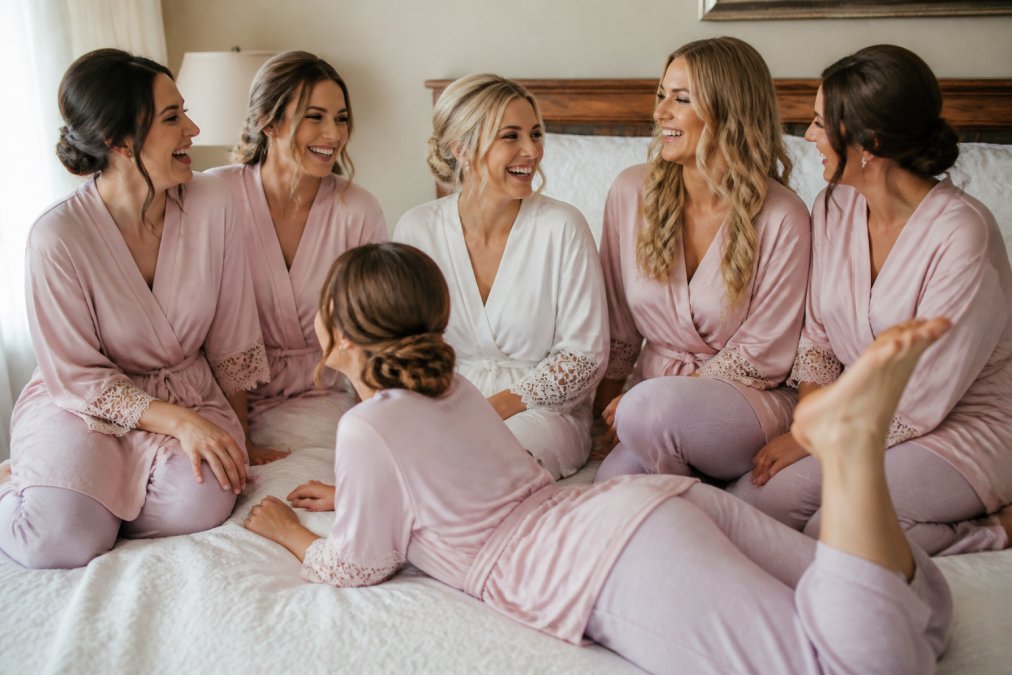
Getting ready robes, pajamas, and loungewear have become essential elements of bridal party apparel, transforming preparation hours into a shared, comfortable experience.
Soft jersey fabrics and crinkled chiffon accommodate diverse body shapes while creating elegant photos. Matching robes allow movement during hair and makeup; button-up shirts and oversized loungewear offer less formal alternatives.
Custom robes eliminate the scramble for appropriate getting-ready wear and signal thoughtful planning. Embroidered initials or custom designs turn them into keepsakes rather than single-use items.
Monogrammed robes, wedding-date designs, or theme-matched pieces become part of your getting-ready story. Urban Echo Tees creates custom robes and loungewear.
Bridal Shower Outfits and Wedding Morning Wear
Bridal shower outfits must feel special without competing with the bride's wedding day aesthetic, while wedding morning wear sets the day's tone and coordination.
Bridal shower trends favor comfortable, elevated casual: coordinated blouses, matching graphic tees, or custom shirts that tie the group together without formal dressing.
Wedding morning wear should photograph well and be easy to change out of. Matching team bride shirts worn from arrival through preparations create visual continuity and reinforce shared purpose.
Modern bridal parties coordinate through color, theme, or design elements while allowing individual expression, replacing rigid uniformity with statement prints and bold colors.
Personalized Wedding Party Gifts That Last
Personalized wedding party gifts have evolved from afterthoughts to centerpieces of the proposal and thank-you process, with custom apparel ranking among the most meaningful gifts bridesmaids receive.
Personalized apparel serves dual function: it's useful during preparations and beyond, yet thoughtful enough to feel special. A custom robe with initials or a sweatshirt with an inside joke becomes a keepsake.
Personalized apparel feels more personal and intentional, since bridesmaids will actually wear them.
Urban Echo Tees offers flexible ordering to design pieces reflecting your theme and include personal touches.
Sustainable and Ethical Bridal Apparel Choices
The 2026 bridal market increasingly prioritizes environmental and ethical impact. Eco-conscious brides seek guidance on material choices, certifications, and whether pieces will be worn beyond the wedding day.
Understanding Sustainable Fabric Options
Organic Cotton uses 88% less water and 62% fewer chemicals than conventional cotton. Costs 10-20% more but offers same comfort and durability. Look for Global Organic Textile Standard (GOTS) certification.
Linen requires minimal water and pesticides; nearly every part of the flax plant is used. Durable and improves with age, but wrinkles easily. Linen-cotton blends (70% linen, 30% cotton) balance durability with reduced wrinkling.
Recycled Polyester diverts waste from landfills and reduces carbon footprint while performing identically to virgin polyester. Verify labels state "100% recycled polyester" rather than relying on greenwashed claims.
Tencel (Lyocell) is made from sustainably harvested wood pulp using a closed-loop process that recycles 99% of solvents. Soft, breathable, and biodegradable; costs slightly more than cotton.
Evaluating Vendor Ethics and Transparency
Ethical vendors should answer: Where is production located? Are workers paid living wages? What is the environmental policy? Are materials sourced responsibly? Request this information directly. Transparent companies provide detailed answers; third-party certifications (Fair Trade, B Corp, GOTS) offer independent verification.
Designing for Longevity, Not Single Use
The most sustainable apparel is worn repeatedly. Research shows 87% of wedding guests purchase single-use outfits, with 68% remaining unworn. Prioritize timeless design and versatility to break this cycle.
Choose classic colors (navy, charcoal, cream, black) and subtle designs (embroidered initials, small dates, simple logos) that bridesmaids wear beyond the wedding. Avoid trendy pastels and large novelty prints that date quickly.
Higher-quality construction (reinforced seams, quality zippers, substantial fabric weight) means pieces last longer. A $45 robe made from 300-gsm linen outlasts a $20 thin polyester robe, lowering lifetime environmental impact.
Calculating True Cost and Environmental Impact
Compare cost-per-wear, not purchase price. A $50 organic cotton robe worn 50 times costs $1 per wear; a $20 polyester robe worn 10 times costs $2 per wear. Ask vendors about environmental metrics (carbon emissions, water usage, waste) and request sustainability reports rather than relying on undefined terms like "eco-friendly."
Building a Sustainable Bridal Party Wardrobe
A sustainable approach combines thoughtful material selection, ethical sourcing, and timeless design: choose one or two high-quality pieces per bridesmaid; prioritize certifications (GOTS, Fair Trade, B Corp); select neutral colors and classic silhouettes; verify vendor transparency; calculate cost-per-wear; communicate sustainability values to bridesmaids.
Sizing, Fit, and Budget Strategies for Bridal Party Orders
Getting sizing right is non-negotiable when ordering bridal party apparel. Unlike off-the-rack dresses with established standards, bridal party apparel varies significantly across manufacturers.
Understanding Sizing Variation Across Apparel Types
Custom tees typically run true to standard sizing, but robes vary by fabric weight. Screen-printed tees may shrink 2-5% if not pre-shrunk.
Collect detailed measurements from each bridesmaid: bust, waist, hip, and length. Provide a measurement guide showing how to measure accurately. Use a soft measuring tape and ask them to wear a fitted shirt during measurement.
Fabric-Specific Fit Considerations
Managing Remote Sizing and Fit Verification
Budget Strategy and Cost Optimization
Creating a Sizing Checklist
Before placing any order, complete this checklist:
- Collect measurements from all bridesmaids in writing (email or form).
- Request a fit guide from your vendor specifying how the chosen fabric and style fit different body types.
- Order a sample in a mid-range size and have a bridesmaid try it on.
- Confirm the vendor's exchange and return policy in writing.
- Verify fabric content, care instructions, and expected shrinkage.
- Allow 6-8 weeks for production and shipping; add 1-2 weeks for fit verification and exchanges.
- Communicate sizing expectations to bridesmaids: explain that custom apparel may fit differently than their usual sizes and that trying on upon arrival is essential.
Frequently Asked Questions
What should bridesmaids wear for getting-ready photos on wedding morning?
Getting ready outfits for bridesmaids should prioritize comfort and coordination. Matching robes, oversized button-up shirts, or custom loungewear work well for photos and allow easy changes into formal attire. Soft jersey fabrics and breathable cotton blends are trending in 2026 for their comfort across different body shapes and sizes. Choose neutral tones or your wedding theme colors to complement the bride's aesthetic while keeping everyone comfortable during hair and makeup.
How far in advance should I order custom bridal party apparel?
Ordering custom bridal party apparel 6-8 weeks before your wedding gives you time for design revisions, production, and delivery without rushing. For smaller orders (under 20 pieces), some vendors can turn around orders in 3-4 weeks. If you need embroidery, screen printing, or complex customization, plan even earlier. Check with your vendor about their typical production timeline and any expedited options available for your specific needs.
What are popular bridal party apparel trends for 2026?
The bridal wear market is growing at 7.35% annually, with 2026 trends moving away from uniform bridesmaid fashion toward statement prints, bold colors, and fashion-forward silhouettes. Custom apparel has become a standard expectation rather than a luxury add-on. Personalization through embroidery and monogramming is increasingly influencing how bridal parties select their apparel.
Can I order bridal party apparel in small quantities without high per-piece costs?
Yes, many custom apparel vendors now accommodate small orders without prohibitive minimums or excessive per-piece pricing. Pricing depends on quantity, design complexity, delivery timeline, and fabric choices. Contact vendors directly for quotes on your specific needs. Small group orders are increasingly common for intimate weddings and destination events, and vendors have adapted their pricing structures accordingly to serve this market segment.