

How to Design Apparel for Weddings: A 2026 Guide
Table of Contents
- Why Custom Wedding Apparel Matters
- Define Your Wedding Style and Vision
- Personalized Wedding Apparel Ideas to Consider
- Best Tools for Designing Custom Clothing
- The Bespoke Design Process: From Concept to Creation
- Wedding Apparel Design Best Practices
- Finding the Right Seamstress or Designer
- Budget Breakdown for Custom Wedding Apparel
Last Updated: August 23, 2026
Why Custom Wedding Apparel Matters
The personalized gifts market was valued at $33.49 billion in 2026. Custom wedding apparel carries memory, intention, and identity into one of life's most significant moments.
What separates custom wedding apparel from off-the-rack options is fit, vision, and emotional resonance. According to research on personalized gifts from the University of Bath, personalized items create lasting emotional connections and enhance self-esteem in both the giver and recipient. Seventy-six percent of wedding guests remember personalized elements more vividly than standardized aspects of the celebration, amplifying the entire event's impact.
At Urban Echo Tees, we understand this intersection of custom design and meaningful moments. According to A.Cherie Couture's wedding industry analysis, 76% of brides report facing challenges in finding a wedding dress that aligns perfectly with their dreams. Custom design bridges that gap. Below, we'll walk you through designing apparel for weddings from concept to final fitting, covering aesthetic definition, silhouette selection, and sustainable fabric choices.
Define Your Wedding Style and Vision
Before sketching or selecting fabric, you need clarity on your wedding aesthetic. Everything, silhouette, embellishments, color palette, hemline, flows from this core vision.
Gathering Inspiration and Design References
Create a mood board (digital or physical) of wedding looks, silhouettes, and details that resonate with you. Pinterest, Instagram, bridal magazines, and designer lookbooks are legitimate research tools. The goal isn't to collect everything you like, but to identify patterns in what you're drawn to.
Look for recurring themes. Are you consistently pulled toward romantic, vintage-inspired details? Modern minimalism? Dramatic statement sleeves? These patterns reveal your actual aesthetic preference. Document specific elements that catch your eye, a neckline style, hemline treatment, sleeve construction, or fabric texture, and write down why each appeals to you. This becomes your design brief.
Choosing Your Silhouette and Fit
Your silhouette is the architectural foundation of your gown. Common silhouettes include:
- A-line: Fitted at the bodice, gradually flares from the waist down. Flattering on most body types.
- Sheath: Fitted through the body with minimal flare. Creates a sleek, modern line.
- Ball gown: Full skirt with a fitted bodice. Creates drama and volume.
- Mermaid: Fitted through the body and hips, flares dramatically at the knee or thigh.
- Dropped waist: Waistline sits lower than the natural waist, creating a vintage or regal line. According to The White Magnolia Bridal Collection's 2026 trend report, demand for dropped waist styles nearly doubled year over year, with unit sales up 91%.
Your silhouette choice should reflect both your personal style and body shape. A consultation with a designer or experienced seamstress can help identify which silhouettes will make you feel most confident.
Personalized Wedding Apparel Ideas to Consider
Custom wedding apparel extends far beyond the bride's gown. Modern weddings celebrate personalization across the entire wedding party and guest attire.
Bridal Gowns and Couture Details
The bridal gown remains the focal point of most weddings. The average bridal gown spend is approximately $2,100, with 19% of brides opting for custom-made attire.
When designing a custom bridal gown, consider these couture details:
Embellishments and texture: Lace, beading, embroidery, and 3D florals add visual interest. According to 2026 trend data, embroidery grew 34% in units, 3D florals rose 57%, and bows surged 1,267% year over year, reflecting strong demand for dimensional, feminine details.
Neckline and sleeve options: A sweetheart neckline creates romance. An illusion neckline offers coverage with visual lightness. Off-the-shoulder designs feel modern and elegant. Cap sleeves, three-quarter sleeves, or dramatic statement sleeves each change the gown's personality.
Fabric choices: Silk charmeuse drapes beautifully and feels luxurious. Tulle creates volume and movement. Lace offers texture and femininity. Crepe provides structure.
Color beyond white: While ivory and white remain traditional, brides increasingly opt for soft pastels, blush tones, and bold colors like emerald or sapphire.
Urban Echo Tees offers personalized anniversary apparel that celebrates milestones beyond the wedding day. Our 365 Days Married First Anniversary T-Shirt and Chapter One Complete First Anniversary Sweatshirt let couples commemorate their journey with custom-designed pieces.
Groomsmen, Bridesmaids, and Wedding Party Attire
Your wedding party's attire should complement the bride's look while reflecting the couple's overall aesthetic. Custom tailoring for groomsmen ensures proper fit and consistency. For bridesmaids, custom designs accommodate different body types while maintaining a cohesive visual line.
Consider personalized details like coordinated color palettes, custom monograms, unique neckline treatments, and fabric selections that photograph well and feel comfortable throughout the event.
Guest Apparel and Casual Wedding Wear
Modern weddings increasingly embrace casual or semi-formal dress codes. Guests may wear personalized casual wear, custom t-shirts, embroidered polos, or personalized sweatshirts that celebrate the couple.
Urban Echo Tees specializes in these casual celebration pieces, creating a sense of unity and transforming attendees into active participants in the couple's story.
Best Tools for Designing Custom Clothing
Digital tools have democratized the design process. Virtual design platforms and remote collaboration software allow couples to work with designers across distances, seeing designs in real-time.
Virtual Design and Remote Collaboration
Virtual fitting services are offered by some bridal boutiques, enabling customers to preview wedding outfits through augmented reality. Key tools include 3D visualization software, video conferencing for real-time consultations, digital mood boards, and measurement apps. The advantage is flexibility and accessibility; the disadvantage is the loss of tactile fabric experience until later stages.
The Bespoke Design Process: From Concept to Creation
Understanding the design workflow helps you set realistic expectations. The process typically spans 4-12 months, depending on complexity and timeline.
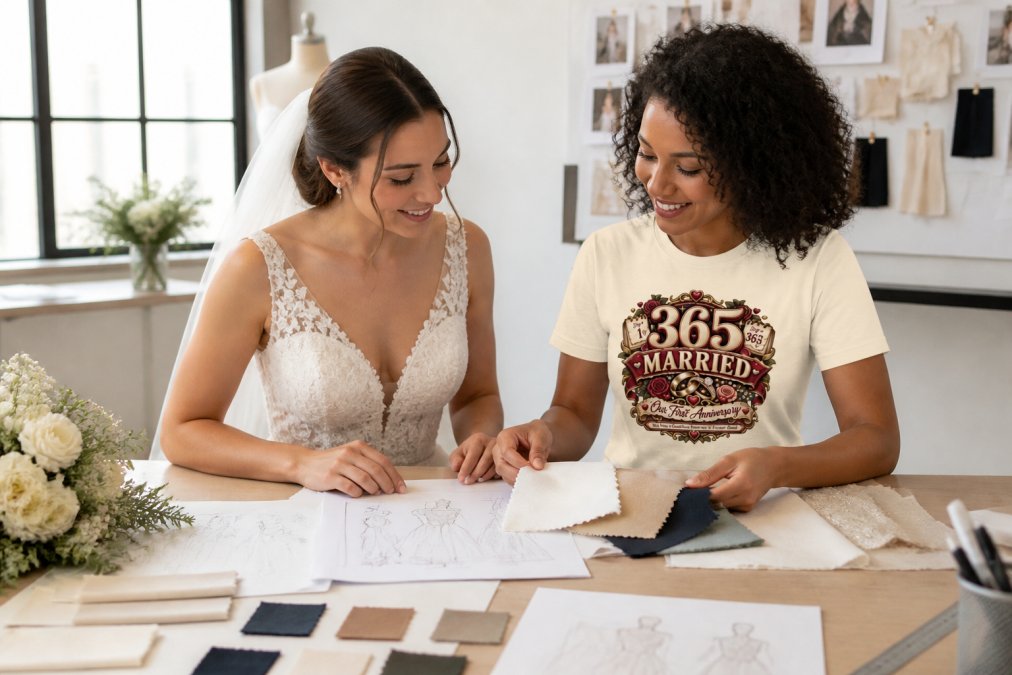
Step 1: Initial Design Consultation and Sketching
Bring your mood board, inspiration images, and specific requirements. Discuss your vision, aesthetic preferences, design elements, non-negotiables, timeline, budget, body shape concerns, and event formality. The designer will sketch preliminary concepts. Expect 2-3 sketch iterations before moving forward.
Step 2: Selecting Fabrics and Materials
Fabric selection fundamentally changes how a design looks, feels, and photographs. Feel fabric samples, hold them to your skin, and observe how they catch light. Ask about care requirements, durability, and behavior during movement.
Consider fabric properties: weight, drape, opacity, stretch, and sheen. Sustainable fabric sourcing is increasingly important, some bridal brands offer sustainable fabrics including organic cotton, recycled polyester, linen, and deadstock fabrics.
Step 3: Taking Precise Measurements
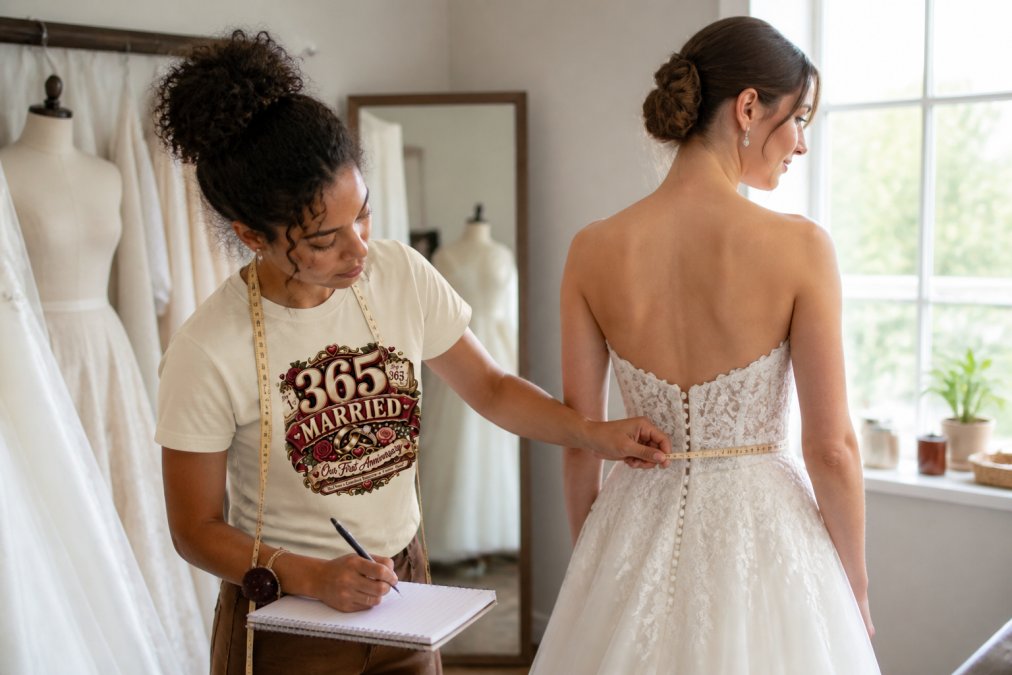
Accurate measurements are non-negotiable. Professional seamstresses use a standardized protocol capturing 15-20 specific points: bust, waist, hip circumference, shoulder width, armhole depth, sleeve length, bodice length, and waist to hem length. Measure wearing undergarments similar to what you'll wear on the wedding day.
Step 4: Pattern Making and Garment Construction
Once measurements are confirmed, the seamstress creates a pattern specific to your body. Garment construction follows this sequence: cutting, interfacing and structure, seam construction, embellishment, assembly, and finishing. This process typically takes 4-8 weeks.
Step 5: First Fitting and Alterations
The first fitting is where theory meets reality. Common adjustments include length, bust or waist, shoulder, sleeve length and cap, and bodice placement. Plan for 2-3 fittings before completion.
Wedding Apparel Design Best Practices
Success comes down to clarity, communication, and realistic expectations.
Fabric Drape, Embellishments, and Hemline Decisions
Fabric drape is how fabric falls and moves on your body. Heavier fabrics drape stiffly; lighter fabrics flow. Embellishments add visual interest but can overwhelm a design. A common mistake is including every detail you like, resulting in visual chaos. If your gown has an intricate beaded bodice, keep the skirt simpler. If you have dramatic statement sleeves, keep the neckline understated.
Hemline decisions depend on formality, venue, and personal preference. A floor-length gown is traditional for formal weddings. A tea-length or knee-length gown feels modern and practical. A high-low hemline offers movement and shows off shoes.
Timeline and Lead Time Expectations
Custom apparel requires time. The average timeline from initial consultation to final garment is 4-12 months. Build in buffer time, if your wedding is 6 months away, start immediately. If it's 3 months away, semi-custom (modifying an existing pattern) may be your option.
Sustainable and Eco-Friendly Fabric Sourcing
Sustainability means considering the environmental and ethical impact of your choices, including fabric sourcing, production methods, and post-wedding garment life. Sustainable options include organic cotton, recycled polyester, linen, deadstock fabrics, and peace silk. Consider whether the seamstress uses ethical labor practices, non-toxic dyes, and whether the garment can be altered or repurposed after the wedding.
| Design Phase | Timeline | Key Decisions |
|---|---|---|
| Consultation & Sketching | Weeks 1-2 | Aesthetic, silhouette, neckline, sleeve style |
| Fabric Selection | Weeks 3-4 | Color, texture, weight, sustainability |
| Pattern & Construction | Weeks 5-8 | Measurements finalized, garment assembled |
| Fittings & Alterations | Weeks 9-10 | Fit refinement, hemline, final adjustments |
| Final Completion | Weeks 11-12 | Quality check, pressing, delivery |
Finding the Right Seamstress or Designer
The person you choose to construct your garment is as important as the design itself. A skilled seamstress or designer understands construction, fit, fabric behavior, and how to translate your vision into reality.
What to look for:
- Portfolio: Do the finishes look clean? Do the garments fit well? Do the designs align with your aesthetic?
- Experience: How many custom garments have they created? Do they have experience with your specific garment type?
- Communication style: Do they listen to your vision or impose their own?
- References: Ask for client references and call them.
- Problem-solving: Do they offer solutions or make excuses?
- Timeline realism: Are they honest about what's feasible?
Red flags include unwillingness to show a portfolio, refusal to discuss timeline or budget upfront, poor communication, and unwillingness to revise designs.
Budget Breakdown for Custom Wedding Apparel
Understanding costs helps you allocate your budget strategically.
Typical cost breakdown for a custom bridal gown:
- Fabric: $50-$500 per yard
- Embellishments (lace, beading, embroidery): $200-$1,000+
- Labor/design fee: $500-$2,000+
- Alterations and fittings: $150-$400
- Total range: $1,000-$10,000+
For bridesmaids or groomsmen attire, costs are typically $300-$800 per garment.
Factors that increase cost: Hand embroidery or intricate beadwork, premium fabrics, complex construction, tight timeline, and geographic location.
Ways to manage budget: Prioritize which garments are fully custom versus semi-custom, choose simpler embellishments, select mid-range fabrics, build in realistic timelines, and consider semi-custom options for bridesmaids or groomsmen.
Urban Echo Tees offers an alternative approach. Our 365 Days Married First Anniversary T-Shirt ($22.99) and Paper Anniversary Society T-Shirt ($22.99) provide custom-designed, high-quality apparel for celebrating milestones without the custom tailoring investment.
Designing apparel for weddings is a deeply personal process that transforms your vision into a tangible garment you'll wear on one of life's most meaningful days. The key is clarity about your aesthetic, timeline, budget, and expectations. A skilled designer or seamstress becomes a partner in that process, translating your dreams into reality through careful construction and thoughtful collaboration.
Whether you're creating a fully custom bridal gown, coordinating wedding party attire, or designing casual celebration pieces for guests, the principles remain the same: intentionality, quality, and attention to detail. Urban Echo Tees understands this commitment to meaningful moments. Our custom apparel celebrates weddings, anniversaries, and life's significant milestones with designs that capture your unique story.
=== FAQ ANSWERS (audit these too, same rules) ===
[1] Q: How far in advance should I start designing custom wedding apparel? A: Start 4-6 months before your wedding for bespoke designs. Most custom-made gowns require 4-12 months from initial consultation to final fitting, depending on complexity and embellishments. If you're designing apparel for your wedding party or guests, begin 3-4 months ahead to allow time for design revisions, fittings, and alterations. Virtual fitting services can compress timelines if you work remotely with your designer.
[2] Q: What are the best fabrics for custom wedding apparel? A: Popular choices include silk charmeuse for drape and elegance, tulle for volume and structure, and lace for romantic embellishment. Lace accounted for more than a quarter of all wedding dress sales in 2025, with unit sales increasing 13.6% year over year. Consider the season, venue, and your personal comfort. Sustainable options like organic cotton and recycled polyester are gaining traction, with some bridal brands offering eco-friendly fabrics. Discuss fabric weight, breathability, and care requirements with your seamstress or designer.
[3] Q: Can I design my own wedding apparel if I have no sewing experience? A: Yes, you don't need sewing skills to design custom apparel. Work with a skilled seamstress or designer who will translate your vision into a finished garment. You provide the creative direction: silhouette preferences, fabric choices, embellishments, and color palette. Your designer handles pattern making, garment construction, and tailoring. Virtual design tools and remote collaboration make this process accessible even if you can't meet in person. The key is clear communication about your aesthetic and expectations.
[4] Q: What are the current trends in personalized wedding apparel for 2026? A: Bows surged 1,267% in sales year over year, while 3D florals rose 57% and embroidery grew 34% in units. Dropped waist styles nearly doubled, expanding from 4% to 7% of total gown sales. Searches for appliqué lace wedding dresses spiked 950%. Brides are curating wardrobes for entire wedding weekends, not just the ceremony. Non-traditional colors like soft pastels, blush tones, emerald, and sapphire are increasingly popular, moving away from pure white. Approximately 61% of couples now invest in customized wedding attire with input on fabric type, embroidery patterns, and color combinations.
[5] Q: What should I budget for custom wedding apparel design and production? A: The average bridal gown spend is approximately $2,100, with 19% of brides opting for custom or semi-custom designs. Budget typically breaks down as: designer consultation ($200-$500), fabric and materials ($50-$500 per yard), labor and construction ($500-$1,500), and alterations ($150-$400). Wedding party apparel ranges from $300-$1,000 per garment depending on complexity. Add 15-20% contingency for design revisions or unexpected adjustments. Discuss all costs upfront with your seamstress or designer to avoid surprises.
[6] Q: How do I choose a color palette for wedding party apparel? A: Start by identifying your wedding's overall aesthetic and season. Consider the venue, lighting, and photography style. Test colors against your skin tone and under different lighting conditions, screens display colors differently than fabric. Trending non-traditional bridal colors include soft pastels, blush tones, emerald, and sapphire. For wedding party coordination, choose a primary color and 1-2 complementary accents. Ensure colors photograph well and remain visible in your venue's lighting. Work with your designer to select specific fabric swatches rather than relying on color names alone.
[7] Q: What are the biggest mistakes to avoid when designing custom wedding apparel? A: Avoid over-designing by including every detail you like, professional designers know cohesive garments need negative space and a single focal point. Don't ignore fabric physics; heavy embellishments without proper structural support can cause sagging and awkward fit. Rushing the timeline leads to stress and poor quality; start early and build in buffer time. Neglecting proper measurements results in fit issues; precision is critical. Finally, don't skip fittings, multiple fitting sessions catch problems before the final garment is completed. Clear communication with your designer about budget, timeline, and expectations prevents costly misunderstandings.
[8] Q: Can I repurpose my wedding dress after the ceremony? A: Yes. Many designers now offer post-wedding alteration services to transform formal wear into wearable pieces. Options include removing the train to create a shorter dress, detaching embellishments for a simpler look, or dyeing the fabric for a completely new aesthetic. Plan for repurposing during the initial design phase by choosing versatile silhouettes and detachable elements. This approach maximizes your investment and reduces waste.
Frequently Asked Questions
How far in advance should I start designing custom wedding apparel?
Start 4-6 months before your wedding for bespoke designs. Most custom-made gowns require 4-12 months from initial consultation to final fitting, depending on complexity and embellishments. If you're designing apparel for your wedding party or guests, begin 3-4 months ahead to allow time for design revisions, fittings, and alterations. Virtual fitting services can compress timelines if you work remotely with your designer.
What are the best fabrics for custom wedding apparel?
Popular choices include silk charmeuse for drape and elegance, tulle for volume and structure, and lace for romantic embellishment. Lace accounted for more than a quarter of all wedding dress sales in 2025, with unit sales increasing 13.6% year over year. Consider the season, venue, and your personal comfort. Sustainable options like organic cotton and recycled polyester are gaining traction, with some bridal brands offering eco-friendly fabrics. Discuss fabric weight, breathability, and care requirements with your seamstress or designer.
Can I design my own wedding apparel if I have no sewing experience?
Yes, you don't need sewing skills to design custom apparel. Work with a skilled seamstress or designer who will translate your vision into a finished garment. You provide the creative direction: silhouette preferences, fabric choices, embellishments, and color palette. Your designer handles pattern making, garment construction, and tailoring. Virtual design tools and remote collaboration make this process accessible even if you can't meet in person. The key is clear communication about your aesthetic and expectations.
What are the current trends in personalized wedding apparel for 2026?
Bows surged 1,267% in sales year over year, while 3D florals rose 57% and embroidery grew 34% in units. Dropped waist styles nearly doubled, expanding from 4% to 7% of total gown sales. Searches for appliqué lace wedding dresses spiked 950%. Brides are curating wardrobes for entire wedding weekends, not just the ceremony. Non-traditional colors like soft pastels, blush tones, emerald, and sapphire are increasingly popular, moving away from pure white. Approximately 61% of couples now invest in customized wedding attire with input on fabric type, embroidery patterns, and color combinations.
What should I budget for custom wedding apparel design and production?
The average bridal gown spend is approximately $2,100, with 19% of brides opting for custom or semi-custom designs. Budget typically breaks down as: designer consultation ($200-$500), fabric and materials ($50-$500 per yard), labor and construction ($500-$1,500), and alterations ($150-$400). Wedding party apparel ranges from $300-$1,000 per garment depending on complexity. Add 15-20% contingency for design revisions or unexpected adjustments. Discuss all costs upfront with your seamstress or designer to avoid surprises.
How do I choose a color palette for wedding party apparel?
Start by identifying your wedding's overall aesthetic and season. Consider the venue, lighting, and photography style. Test colors against your skin tone and under different lighting conditions, screens display colors differently than fabric. Trending non-traditional bridal colors include soft pastels, blush tones, emerald, and sapphire. For wedding party coordination, choose a primary color and 1-2 complementary accents. Ensure colors photograph well and remain visible in your venue's lighting. Work with your designer to select specific fabric swatches rather than relying on color names alone.
What are the biggest mistakes to avoid when designing custom wedding apparel?
Avoid over-designing by including every detail you like, professional designers know cohesive garments need negative space and a single focal point. Don't ignore fabric physics; heavy embellishments without proper structural support can cause sagging and awkward fit. Rushing the timeline leads to stress and poor quality; start early and build in buffer time. Neglecting proper measurements results in fit issues; precision is critical. Finally, don't skip fittings, multiple fitting sessions catch problems before the final garment is completed. Clear communication with your designer about budget, timeline, and expectations prevents costly misunderstandings.
Can I repurpose my wedding dress after the ceremony?
Yes. Many designers now offer post-wedding alteration services to transform formal wear into wearable pieces. Options include removing the train to create a shorter dress, detaching embellishments for a simpler look, or dyeing the fabric for a completely new aesthetic. Plan for repurposing during the initial design phase by choosing versatile silhouettes and detachable elements. This approach maximizes your investment and reduces waste.
This article was written using GrandRanker