

Why Small Batch Custom Shirts Cost More
Table of Contents
- Why Small Batch Custom Shirts Cost More Than Bulk Orders
- Screen Printing Setup Fees and Why They Matter for Small Orders
- DTG vs Screen Printing Cost: Which Method Works for Small Batches
- Key Cost Factors That Drive Small Batch Pricing
- How to Save Money on Custom Apparel Without Sacrificing Quality
- DIY vs. Outsourcing: Where Your Money Actually Goes
- Conclusion
Last Updated: August 3, 2026
Why do small batches cost so much more per shirt? The answer lies in how custom apparel production works. When you order 10 custom shirts, you're not paying 10 times the cost of 1 shirt. You're paying for setup, design work, screen preparation, and labor that gets split across those 10 units instead of 100. Below, we'll break down exactly what drives these costs, compare production methods, and show you where you can actually save money without cutting corners on quality.
Why Small Batch Custom Shirts Cost More Than Bulk Orders
The single biggest reason small batch custom shirts carry higher per-unit costs is economies of scale. When you order 100 shirts, the fixed costs (design setup, screen preparation, labor overhead) spread across 100 units. When you order 10, those same costs divide by 10.
The printer spends the same 2 hours setting up screens whether you're ordering 10 shirts or 100. On a 100-unit order, that 2 hours of labor costs about $2 per shirt. On a 10-unit order, it's $20 per shirt. The garment itself might cost $3-5 regardless of order size, but the production overhead is what drives up costs on small runs.
Professional shops have rent, equipment, insurance, and staff whether they're running a 10-shirt order or a 500-shirt order. Those costs don't disappear just because your order is small.
Many traditional screen printing shops won't touch orders under 25-50 units because the economics don't work for them. The shops that DO accept small orders charge a premium to make it worthwhile. Digital printing methods like direct-to-garment (DTG) have lower setup costs, which is why they're more competitive for small batches. But they have higher per-shirt ink and labor costs, which means the price advantage disappears once you hit certain order volumes.
The Economies of Scale Problem
Economies of scale is the fundamental reason why bulk orders cost less per unit. A 50-unit order might cost $18 per shirt. A 10-unit order might cost $28 per shirt. The difference isn't greed, it's how fixed costs are allocated.
Here's what those fixed costs typically include:
- Design consultation and file preparation (1-3 hours of labor)
- Screen creation for screen printing (varies by color count)
- Color matching and ink mixing
- Machine setup and calibration
- First-run quality checks and adjustments
- Packaging and labeling
On a 50-shirt order, that might total $150-200 in overhead. Divided by 50 units, that's $3-4 per shirt added to the base cost. On a 10-shirt order, the same $150-200 divided by 10 units adds $15-20 per shirt.
When a printer runs 100 identical shirts back-to-back, they hit a rhythm. Setup happens once. Quality checks happen once every 10-15 shirts. On a 10-shirt order, that same printer stops and starts more frequently, context-switching between different orders, and spending proportionally more time on setup relative to production time. This inefficiency costs money.
Screen Printing Setup Fees and Why They Matter for Small Orders
Screen printing setup fees are where small batch pricing gets painful. These fees cover the cost of creating screens, the physical tools that hold the ink and transfer the design onto the shirt.
What setup fees actually cover:
- Film separation and exposure (converting your design into screen-ready format)
- Screen coating and exposure to UV light
- Screen cleaning and registration (lining up multiple colors perfectly)
- Test prints and color matching
- Storage of screens for future reprints
A single-color screen setup might cost $25-50. A four-color design might run $100-150 in setup alone. If you're ordering 10 shirts, that's $10-15 per shirt in setup costs before the garment and ink are even considered.
| Order Size | Setup Cost | Per-Shirt Setup |
|---|---|---|
| 10 shirts | $150 | $15.00 |
| 25 shirts | $150 | $6.00 |
| 50 shirts | $150 | $3.00 |
| 100 shirts | $150 | $1.50 |
Some shops offer a "small order surcharge" instead of a setup fee. This is often a flat $25-50 added to the order, which is actually more favorable for very small batches.
DTG vs Screen Printing Cost: Which Method Works for Small Batches
Direct-to-garment (DTG) printing and screen printing have completely different cost structures.
Direct-to-garment printing favors small orders dramatically. DTG printers spray ink directly onto the shirt using inkjet technology, similar to printing on paper, but with fabric-specific inks and a heat press at the end. The setup cost is nearly zero, no screens to create, no color separations, no registration. A single-shirt order costs almost the same as a 10-shirt order from a DTG shop.
The tradeoff is per-shirt ink cost. DTG ink is expensive, and ink coverage directly impacts the final price. For small batches under 25 units, DTG is almost always cheaper per shirt.
Screen printing works the opposite way: high setup costs, low per-shirt costs. The more shirts you print, the cheaper each one becomes. Screen printing also produces more durable prints because the ink is pushed through a mesh screen directly into the fabric fibers, creating a bond that lasts longer through washing and wear.
Heat transfer and other methods fall somewhere in between, making them competitive for 15-50 unit orders.
The method choice also depends on your design. Screen printing works best for solid colors and simple graphics. DTG handles photographic images and complex color gradients. If your design has 8+ colors or a photo, DTG is your only real option.
Key Cost Factors That Drive Small Batch Pricing
Base garment quality and sourcing matters more than most people realize. A cheap blank t-shirt might cost $1.50 in bulk. A higher-quality blank with better fabric weight, softer hand-feel, and more durable stitching costs $3-5. If a printer stocks common blanks, they can offer better prices. Specialty garments (organic cotton, performance fabric, vintage-style blanks) carry a premium.
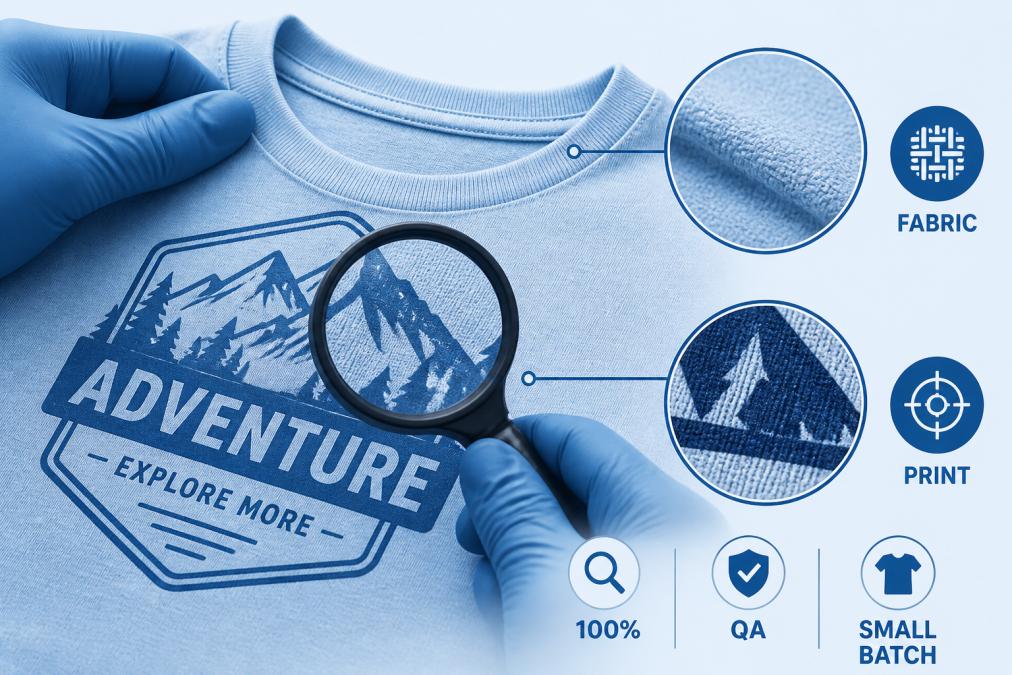
Design complexity and color count directly impact production costs. A single-color design is cheap. A four-color design with precise registration costs more. Each additional color requires additional screen setup or ink passes. Complex designs also increase the likelihood of setup mistakes, which means more test prints and adjustments.
Labor and production time is often invisible in pricing, but it's real. A single-color print might take 2 minutes per shirt. A four-color print might take 5-7 minutes per shirt. On a 10-shirt order, that's 50-70 minutes of labor. Labor is built into the printer's hourly rate, so small orders that require more per-unit labor time get priced accordingly.
How to Save Money on Custom Apparel Without Sacrificing Quality
Timing and turnaround flexibility is your biggest lever. Rush orders (48-hour turnaround or faster) cost 20-40% more than standard orders (7-10 day turnaround). If you can plan ahead and give the printer 2+ weeks, you'll see significantly lower pricing. Some shops offer 10-15% discounts for orders placed 6-8 weeks in advance.
Simplifying your design saves money in multiple ways. Fewer colors mean lower setup costs and less labor. Simpler artwork means fewer test prints and adjustments. Designs that fit standard placement (front chest or full front) are cheaper than custom positioning. A well-executed two-color design can look better than a poorly executed four-color design.
Choosing the right print method for your specific order size is critical. If you're ordering 12 shirts, DTG is almost certainly cheaper than screen printing. If you're ordering 75 shirts, screen printing is almost certainly cheaper than DTG.
DIY vs. Outsourcing: Where Your Money Actually Goes
Some people look at custom apparel pricing and think, "I'll just buy a printer and do it myself." This usually ends badly.
The hidden costs of DIY printing start with equipment. A heat press runs $200-500 for a basic model. A screen printing setup runs $2,000-5,000 for entry-level equipment. A DTG printer runs $5,000-15,000 minimum.
You also need workspace, consumables (ink, screens, emulsion, blank garments), quality control tools, software, and cleanup supplies. If you're ordering 10 shirts once, DIY makes no sense.
The hidden costs also include time and mistakes. Your first 20-30 shirts will have quality issues. You'll waste blanks and materials while learning. A professional printer has already paid that learning curve.
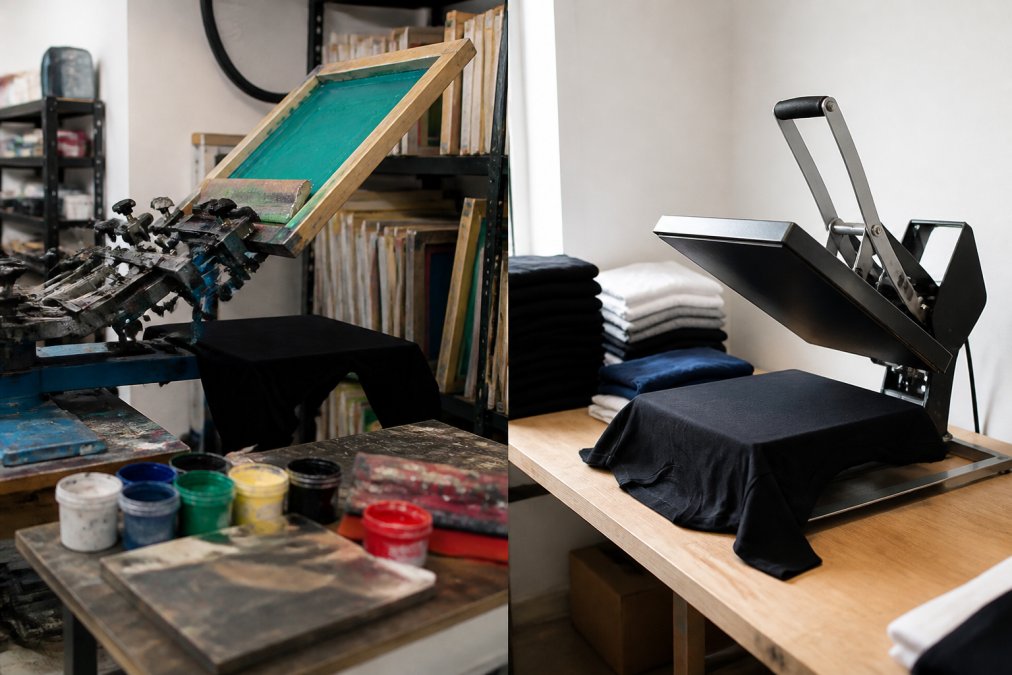
What you pay for with professional production is expertise, equipment, and efficiency. A professional printer has already invested $10,000-50,000+ in equipment, optimized their workflow through thousands of orders, built quality control systems, and can handle rush orders or last-minute changes.
For most people, outsourcing makes sense. The per-shirt cost of a small batch order is still cheaper than the equipment and learning curve of DIY.
Small batch custom shirts cost more because fixed production costs don't scale down with smaller orders. Understanding where the costs come from helps you make smarter choices about timing, design, and production method.
Urban Echo Tees offers custom T-shirts and sweatshirts designed to celebrate life's most meaningful moments. We provide high-quality, custom-designed clothing that serves as the perfect gift for any occasion. Discover the perfect piece to commemorate your special events and milestones with our versatile and stylish apparel. If you're ordering custom shirts for a wedding, family trip, or school event, we've built our process around making small batches affordable and stress-free.
Frequently Asked Questions
Why do small batch custom shirts cost so much more per shirt than bulk orders?
Small batch custom shirts have higher per-unit costs because fixed expenses like setup fees, design work, and labor are spread across fewer garments. A screen printing setup might cost $50-100, but on a 10-shirt order that's $5-10 per shirt, while on 100 shirts it's just 50 cents to $1. Additionally, smaller production runs don't benefit from economies of scale, so vendors can't negotiate lower base garment costs or optimize their production workflow as efficiently.
What are screen printing setup fees and how much do they typically add to my order?
Screen printing setup fees cover the cost of creating screens for your design, which involves separating your artwork into individual color layers, exposing screens, and preparing them for production. These fees vary by vendor and design complexity but are applied once per order regardless of quantity. For small orders, this fixed cost represents a significant portion of your total price. Choosing a simpler design with fewer colors can reduce or eliminate setup charges with some vendors.
Is direct-to-garment (DTG) printing cheaper than screen printing for small orders?
Direct-to-garment printing is often more cost-effective for small batches because it has no screen setup fees and works well for complex, multi-color designs without additional labor. However, DTG has higher per-shirt material costs than screen printing, so the advantage decreases as order size increases. For orders under 25 shirts, DTG typically offers better pricing. Above that, screen printing usually becomes more economical. The best choice depends on your design complexity, quantity, and timeline.
What practical steps can I take to reduce the cost of small batch custom apparel?
Simplify your design by reducing the number of colors, choosing a standard garment size instead of custom sizing, and building in extra time for production so vendors can batch your order with others. Consider limiting your design to one or two colors for screen printing, which eliminates complex ink separation costs. Select a quality base garment that's readily available rather than specialty fabric. If possible, order slightly larger quantities to take advantage of better per-unit pricing without dramatically increasing your total investment.
This article was written using GrandRanker