

How to Prevent Custom Shirt Fading: 2026 Care Guide
Table of Contents
- Why Custom Shirts Fade and Crack (And What You Can Control)
- Step 1: Wash Custom Shirts Inside Out on Cold
- Step 2: Choose the Right Detergent and Skip Additives
- Step 3: How to Dry Custom Shirts Without Cracking
- Step 4: Ironing and Storage Tips for Graphic Tees
- DTF vs Screen Print Durability: Know Your Print
- How to Wash Custom Printed Teacher Sweatshirts
- Final Checklist for Long-Lasting Custom Apparel
- Frequently Asked Questions
Last Updated: September 5, 2026
Custom shirt fading is the gradual loss of color and integrity in printed apparel caused by heat, friction, and chemical exposure during laundering. The global t-shirt market is valued at $30.68 billion in 2026, with custom printing identified as one of its fastest-growing segments, according to Printful's t-shirt industry statistics. That means millions of graphic tees are hitting washing machines every week, and most of them are being washed wrong. The good news is that you can prevent most fading before it starts with a few specific habits. This guide from Urban Echo Tees walks through the exact washing, drying, and storage steps that keep custom apparel looking fresh for years, not months.
Most people assume fading is inevitable, but research tells a different story. A 2022 study on garment failure published by ScienceDirect's circular fashion research found that consumers contribute to color fading by washing garments too frequently and using excessive or unsuitable washing powder. You are not fighting an unstoppable force; you are fighting your own laundry routine.
Why Custom Shirts Fade and Crack (And What You Can Control)
Custom shirt fading happens through three main mechanisms: heat breaking down dye molecules, friction abrading the print surface, and chemical reactions from detergents and additives. You cannot control the quality of the original print, but you can control roughly 80% of what happens after the shirt leaves the packaging.
The custom t-shirt printing market is projected to grow at a CAGR of 8.14% to 12.3% through 2030, per Companies History market analysis. As more people buy personalized apparel, the demand for durability guidance grows alongside it. Industry trends for 2026 show consumers increasingly prioritizing clean construction and high-quality fabrics to avoid fading, pilling, and shrinking, as reported by Impressions Magazine's 2026 t-shirt trends.
What you can control breaks down into four categories: wash temperature, detergent choice, drying method, and mechanical agitation.
Step 1: Wash Custom Shirts Inside Out on Cold
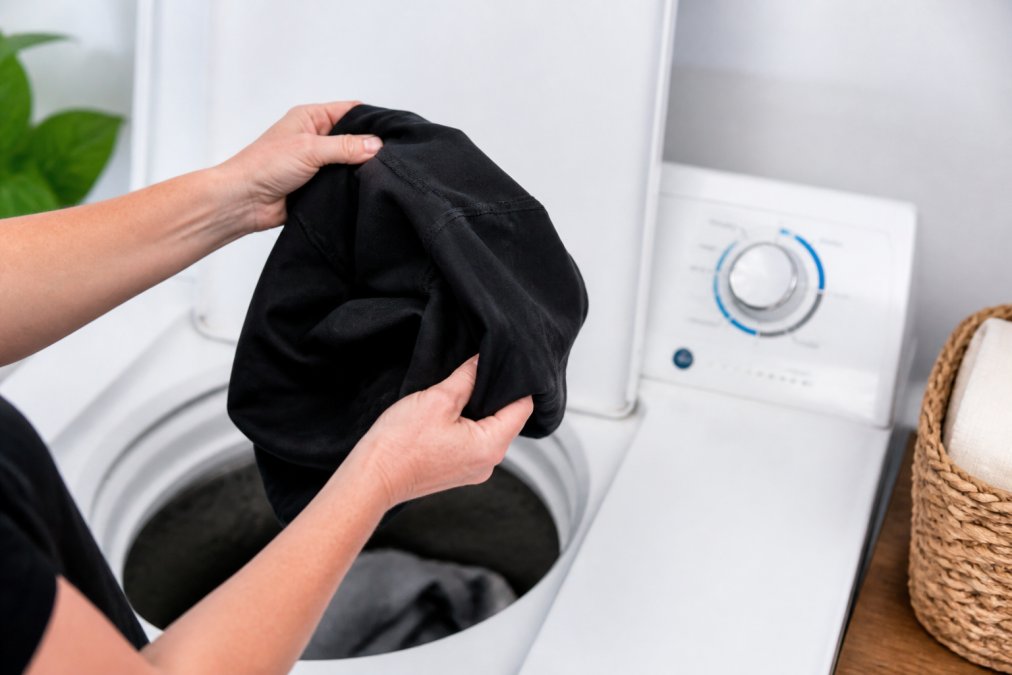
Turn the shirt inside out before every wash. This single action protects the printed surface from the two biggest threats in the machine: abrasive contact with other garments and direct exposure to detergent agitation.
Cold water is non-negotiable for graphic tees. The recommended care protocol for 2026 from Action Designs 4U's durable custom shirts guide specifies turning shirts inside-out before washing, using cold water, and selecting a gentle cycle. Water temperature below 80°F preserves the polymer bonds in the ink while still lifting everyday dirt.
Choose the gentle or delicate cycle on your machine. This reduces the spin speed and agitation time, which means less friction against the print. If your washer has a heavy-duty option, avoid it.
Step 2: Choose the Right Detergent and Skip Additives
Standard liquid detergent in the recommended dose is all you need. The problem is not the detergent itself; it is the additives people add on top, and the mineral content of the water they use.
Bleach is the obvious enemy, but fabric softener is the silent one. Fabric softener coats fibers with a waxy residue that can dull colors and break down the adhesive bond between the print and the fabric. Skip it entirely. The same applies to optical brighteners found in some powder detergents.
The ScienceDirect research on garment failure emphasizes that excessive or unsuitable washing powder is a primary driver of color degradation. Use the manufacturer's recommended amount, not a heaping scoop.
The Water Hardness Factor Most Guides Ignore
Most care guides stop at detergent, but the water you wash with plays a major role in fading. The U.S. Geological Survey (USGS) reports that over 85% of American homes have hard water, meaning it contains elevated levels of dissolved calcium and magnesium. These minerals interfere with the surfactants in your detergent, forcing you to use more to get the same cleaning result. That excess detergent residue then traps minerals against the fabric and print, accelerating dye breakdown.
If you live in a region with hard water, you have two practical options:
- Add a water softener to the wash cycle. A half-cup of washing soda (sodium carbonate) added directly to the drum before the clothes helps sequester the calcium and magnesium ions, allowing your regular detergent to work more efficiently. Do not confuse washing soda with baking soda; washing soda is more alkaline and is specifically formulated for this purpose.
- Use a chelating agent. Products containing EDTA or sodium citrate bind to the minerals and keep them suspended in the wash water so they do not deposit on your garments. These are often sold as "hard water laundry boosters" in grocery stores.
For stubborn stains on white areas of a graphic tee, spot-treat with a small amount of mild soap directly on the stain before washing. Do not rub the printed area aggressively. Let the spot treatment sit for five minutes, then wash normally on cold.
Step 3: How to Dry Custom Shirts Without Cracking
Air drying is the gold standard for preventing custom shirt cracking. Hang the shirt on a plastic or wooden hanger in a well-ventilated area, away from direct sunlight. UV rays fade both fabric dye and print ink, so a shaded spot indoors or under a covered porch works best.
If you must use a dryer, keep the heat setting on low or no-heat tumble. High heat softens the plasticizers in screen print ink and causes it to become brittle as it cools, which leads to cracking.
Remove the shirt from the dryer while it is still slightly damp. Hang it to finish drying. This reduces total heat exposure time and prevents over-drying.
Step 4: Ironing and Storage Tips for Graphic Tees
Never place an iron directly on a printed design. The heat will melt vinyl, bubble plastisol, and distort DTF transfers. If a shirt needs ironing, turn it inside out and iron the back side on low to medium heat with no steam.
For storage, fold graphic tees rather than hanging them. Hangers stretch the neckline and create shoulder bumps that distort the print over time. If you must hang them, fold the shirt over the bottom bar of the hanger so the weight hangs from the middle.
Store folded tees in a cool, dark drawer or shelf. Avoid plastic storage bins that trap moisture, which can encourage mildew growth on both fabric and print.
DTF vs Screen Print Durability: Know Your Print
DTF vs screen print durability depends on the ink system and how the garment is cared for. Direct-to-film transfers use a powdered adhesive that bonds to the fabric at a molecular level, making them highly flexible and resistant to cracking. Screen printing lays down a thicker layer of plastisol ink that sits on top of the fabric, making it more prone to cracking.
For daily wear, DTF generally outperforms screen print in terms of flexibility and wash resistance. Screen print excels in color opacity on dark fabrics and has a longer track record. Neither will survive a hot dryer cycle or bleach exposure.
Care Instructions by Ink Type
The generic advice above applies to all prints, but the specific chemistry of your ink determines which threats matter most. Most custom shirts use one of three ink systems:
Plastisol Ink (Most Common)
Plastisol is a PVC-based ink that sits on top of the fabric rather than soaking in. It is the most durable option for color vibrancy but has a specific weakness: heat. The plasticizers that keep plastisol flexible begin to migrate and break down above 160°F. A standard dryer cycle on medium heat reaches 135-150°F, but the "high heat" setting can spike to 175°F or more. This is why plastisol prints crack.
For plastisol prints, the most critical rule is to never use high heat in the dryer. Air drying is strongly preferred. If you must use a dryer, use the "no heat" or "air fluff" setting and remove the shirt while still slightly damp.
Water-Based Ink
Water-based inks soak into the fabric fibers rather than sitting on top, which means they fade differently. The pigment is absorbed into the cotton, so there is no raised layer to crack. However, the dye is more susceptible to chemical breakdown. Chlorine bleach, even in trace amounts from municipal water supplies, will attack water-based pigments faster than plastisol.
For water-based prints, the priority is chemical protection. Use a liquid detergent without optical brighteners, and avoid any chlorine-based additives. Cold water is essential because warm water opens up the fiber structure and allows the pigment to leach out.
Discharge Ink
Discharge printing uses an activating agent that removes the shirt's original dye and replaces it with the print color. This creates a soft, breathable print that feels like part of the fabric. The trade-off is that the discharged areas are more vulnerable to re-absorption of dyes from other garments in the wash.
For discharge prints, sorting by color is not optional, it is the single most important step. Wash these shirts only with similar light colors, and never with new dark garments that may bleed excess dye.
| Print Type | Primary Threat | Critical Rule | Best Care Method |
|---|---|---|---|
| Plastisol | Heat above 160°F | Never use high dryer heat | Inside out, cold wash, air dry |
| Water-Based | Chlorine and brighteners | Use brightener-free liquid detergent | Inside out, cold wash, low heat dry |
| Discharge | Dye migration from other garments | Wash only with similar colors | Inside out, cold wash, color-sorted load |
| Vinyl Heat Transfer | Heat and mechanical stress | Delicate cycle only | Inside out, cold wash, air dry |
How to Wash Custom Printed Teacher Sweatshirts
Teacher sweatshirts face unique challenges because they get worn weekly, washed often, and subjected to classroom wear and tear. The fleece interior is more delicate than a standard tee, and the print area is larger.
Wash custom printed teacher sweatshirts inside out on cold with similar colors. The gentle cycle is essential because sweatshirt fabric pills easily under aggressive agitation. Turn the sweatshirt inside out before drying as well, and use the lowest heat setting possible. Fleece takes longer to dry than cotton, so expect a longer cycle.
Final Checklist for Long-Lasting Custom Apparel
The complete routine for preventing custom shirt fading fits on a single index card. Follow these steps every time you wash a graphic tee or sweatshirt:
- Turn the garment inside out before washing
- Use cold water below 80°F
- Select the gentle or delicate cycle
- Use the recommended amount of standard liquid detergent
- Skip bleach, fabric softener, and optical brighteners
- Air dry away from direct sunlight, or use low-heat tumble
- Remove from the dryer while slightly damp
- Iron inside out only, never on the print
- Fold for storage, do not hang
- Sort custom apparel away from denim and towels
Custom apparel trends shift within two-year cycles, but garment longevity never goes out of style. The custom shirt fading you see after a few washes is almost always preventable with the right habits. At Urban Echo Tees, we design our custom T-shirts and sweatshirts for life's meaningful moments. Get started with Urban Echo Tees and order custom apparel that will still look great after its fiftieth wash.
Frequently Asked Questions
Does turning shirts inside out actually prevent fading?
Yes. Turning your shirt inside out protects the printed design from direct friction against other garments and the drum of the washing machine. This friction is a primary cause of surface wear that leads to fading and cracking. The inner layer of fabric takes the abrasion instead of the print, keeping the design's colors vibrant for significantly more washes.
What lasts longer, DTF or screen print?
Screen prints are traditionally considered the most durable option for simple designs with limited colors. They create a thicker ink layer that bonds well with the fabric. DTF (Direct to Film) prints offer excellent durability and flexibility for detailed, full-color designs. Both can last for years with proper care, which means washing in cold water, drying on low heat, and avoiding direct ironing.
Can fabric softener damage custom shirt prints?
Yes, fabric softeners and dryer sheets can damage custom shirt prints. They leave a chemical residue on the fabric and the print itself, which can break down the ink or vinyl over time and cause it to fade or peel. For custom apparel, skip the softener entirely. Use a mild liquid detergent and, if needed, add a half-cup of white vinegar to the rinse cycle to soften fabric naturally without harming the print.
How do I fix a custom shirt that has already started fading?
Once a print has faded, you cannot fully restore it. You can slow further damage by washing inside out in cold water and hanging it to dry away from direct sunlight. For badly faded designs, consider it a backup shirt and order a replacement. Many print shops keep your original design file, making reorders simple.
This article was written using GrandRanker