

Durable Printing Methods for Custom Sweatshirts
Table of Contents
- Why Durability Matters in Custom Sweatshirt Printing
- Screen Printing vs DTF Durability: Which Lasts Longer
- Comparing All Major Printing Methods
- How to Prevent Sweatshirt Prints from Cracking
- How to Wash Custom Printed Teacher Sweatshirts
- Fabric Composition and Print Durability
- Choosing the Right Method for Your Order Size and Timeline
- Conclusion
Last Updated: August 25, 2026
Why Durability Matters in Custom Sweatshirt Printing
Durability is the difference between a sweatshirt that looks great on day one and one that still looks great after 50 washes. When you're investing in custom apparel, the printing method you choose directly determines how long your design remains vibrant and intact. Screen printing can last 100+ washes with proper care, while direct-to-garment printing typically holds up for 30-50 washes (peer-reviewed research). Embroidery lasts the lifetime of the garment because thread is stitched directly into fabric and cannot fade or peel.
A branded sweatshirt generates an average of 6,100 lifetime brand impressions at a cost-per-impression below $0.004, according to recent industry data (peer-reviewed research). But that ROI only works if the print survives long enough to deliver those impressions. Durability isn't just about the printing method itself, it's about how the method interacts with your fabric choice, your washing habits, and the specific design you're printing.
Screen Printing vs DTF Durability: Which Lasts Longer
Screen printing remains the gold standard for durability. Properly cured plastisol screen printing delivers 100+ washes without degradation. The reason is simple: plastisol ink bonds through heat curing, creating a durable, slightly raised texture that resists cracking.
DTF (Direct-to-Film) printing is the newer challenger, offering 50+ washes of durability without visible degradation. For dark fabrics and complex multi-color designs, DTF outperforms screen printing because it requires no underbase and produces vibrant colors that don't fade as quickly.
The practical difference comes down to your design and fabric color. Screen printing excels with bold, single-color or limited-color designs on light fabrics. DTF wins when you need photorealistic images or all-over prints on dark fabrics. Water-based screen printing delivers roughly 50+ washes of durability with a softer hand-feel than plastisol, though it requires more careful curing.
Comparing All Major Printing Methods
Four dominant methods compete for custom sweatshirt work, each with distinct durability profiles and best-use scenarios.
Screen Printing applies plastisol ink through a mesh screen and cures with heat, creating a raised, textured finish. Durability reaches 100+ washes with proper curing. Cost per unit drops significantly at higher volumes (50+ shirts), making it ideal for bulk orders. The tradeoff: minimum order quantities are typically 24-50 units, and setup costs are higher upfront.
Direct-to-Garment (DTG) Printing uses inkjet technology to spray water-based inks directly onto fabric. Durability ranges from 30-50 washes depending on ink quality and fabric. The advantage is flexibility, you can print one shirt or 100 without setup fees or minimum orders. Colors on light fabrics are vibrant, but on dark fabrics, DTG struggles without an expensive underbase layer.
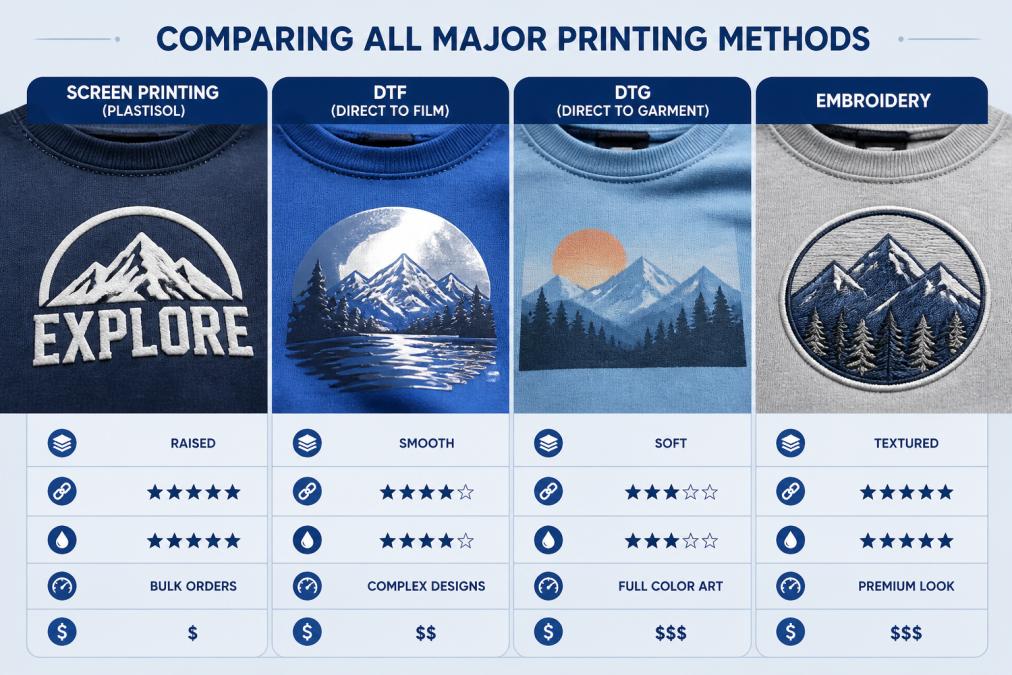
Embroidery stitches thread directly into fabric, creating a dimensional, professional look. Durability is essentially unlimited, the thread lasts the lifetime of the garment. Embroidery is best for logos, wordmarks, and simple graphics under 8 cm wide. Complex designs with fine details don't work well because thread thickness limits resolution. There's no minimum order requirement, though turnaround time is typically 5-10 business days.
Heat Transfer and Vinyl Methods apply pre-printed or pre-cut designs using heat and pressure. Vinyl transfers typically last 30-40 washes, while heat transfer papers vary from 20-50 washes. These methods work well for small, detailed designs and are affordable for small orders, but they're not ideal for frequent washing.
| Method | Durability | Best For | Minimum Order | Cost Per Unit |
|---|---|---|---|---|
| Screen Printing | 100+ washes | Bold logos, bulk orders | 24-50 units | $5-12 (high volume) |
| DTG | 30-50 washes | Small batches, photo-quality | 1 unit | $12-18 |
| DTF | 50+ washes | Dark fabrics, all-over prints | 1 unit | $8-15 |
| Embroidery | Lifetime | Logos, wordmarks | 1 unit | $8-20 |
| Vinyl Transfer | 30-40 washes | Detailed designs | 1 unit | $6-12 |
Direct-to-Garment (DTG) Printing
DTG prints directly onto fabric using water-based inks, making it ideal for small orders and complex designs. Colors are vibrant on light fabrics, and there's no setup cost or minimum order. The durability trade-off is real: DTG typically holds up for 30-50 washes before fading becomes visible. On dark fabrics, DTG struggles unless you use an expensive white underbase layer.
DTG works best for small orders (1-20 shirts) where screen printing setup costs don't make financial sense. Turnaround time is fast, typically 3-5 business days.
Embroidery for Maximum Longevity
Embroidery is the durability champion. Thread is stitched directly into the fabric weave, making it impossible to peel, crack, or fade. An embroidered logo will outlast the sweatshirt itself. According to recent industry surveys, 53% of swag buyers are "very" or "extremely" interested in premium decoration like embroidery, recognizing that it signals quality that printing methods cannot replicate (peer-reviewed research).
The constraints are design-specific. Embroidery works beautifully for logos, text, and simple graphics. Fine details, gradients, and photorealistic images don't translate well because thread thickness limits resolution. Cost per unit is moderate, typically $8-20 depending on design complexity.
Heat Transfer and Vinyl Methods
Heat transfer uses pre-printed designs applied to fabric with heat and pressure. Vinyl transfer uses pre-cut vinyl shapes applied the same way. Both methods are affordable and work well for small, detailed designs. Durability varies: vinyl transfers typically last 30-40 washes before peeling or cracking becomes visible. These methods work best for small orders where cost-per-unit is low, but they're not ideal if longevity is your priority.
How to Prevent Sweatshirt Prints from Cracking
Cracking happens when the ink or transfer layer loses flexibility and the fabric underneath continues to move. Prevention starts with choosing the right printing method for your fabric, but proper care during and after printing matters equally.
During production, curing temperature and time are critical. Under-cured plastisol screen printing will crack within weeks because the ink hasn't fully bonded to the fabric. For DTF and heat transfer methods, pressure and temperature during application determine how well the design adheres.
After printing, the garment needs to cool completely before it's handled or packaged. Folding or stacking a hot printed sweatshirt can cause the ink to crack as it cools unevenly. Storage in damp conditions weakens the ink bond, keep printed garments in a dry environment until they're shipped or worn.
How to Wash Custom Printed Teacher Sweatshirts
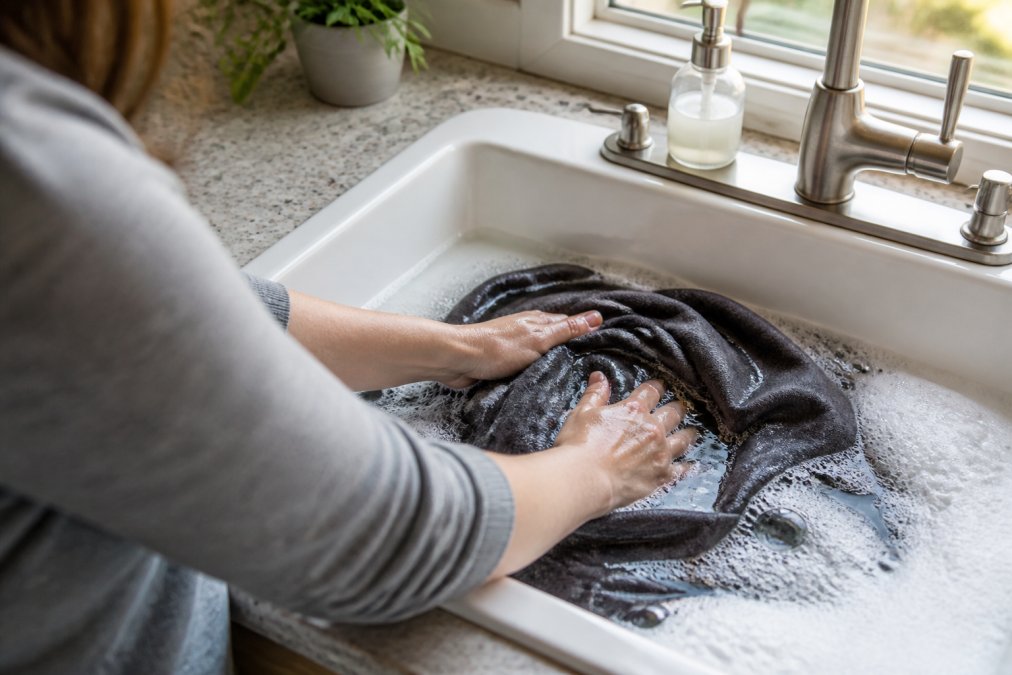
Washing habits determine how long your print actually lasts. The golden rule: wash inside out in cold water. Turning the sweatshirt inside out protects the printed side from direct friction with the washing machine drum. Cold water prevents the ink from softening and becoming vulnerable to cracking.
Use mild detergent and avoid bleach or optical brighteners, which can fade or damage the print. Fabric softener should be skipped, it leaves a residue that can interfere with the ink bond. Wash with similar colors to prevent dye transfer.
Dry on low heat or hang dry. High heat in the dryer accelerates ink degradation and can cause cracking as the fabric shrinks. Air drying is gentler and extends print life significantly. Avoid the dry cleaner for printed sweatshirts, the chemicals used can dissolve or fade certain inks.
Fabric Composition and Print Durability
Not all fabrics accept durable printing equally. The interaction between fabric and ink is where many printing failures happen.
100% Cotton is the classic choice for screen printing and DTG. Cotton absorbs water-based inks well and allows proper curing. Screen printing on cotton delivers excellent durability, 100+ washes is realistic. The downside: cotton shrinks slightly with washing, which can cause screen-printed designs to crack if the fabric shrinks more than the ink can flex.
Cotton-Polyester Blends (80/20 or 50/50) offer a balance. Polyester reduces shrinkage, which is good for print durability. DTF printing performs exceptionally well on blends because the film layer bonds to both cotton and polyester fibers.
100% Polyester is common in athletic sweatshirts. Polyester doesn't shrink, which helps print durability. However, polyester is hydrophobic, so water-based inks and DTG don't work as well. Screen printing with plastisol ink works fine on polyester. DTF is ideal for polyester because the film layer doesn't depend on water absorption.
Fleece and Brushed Fabrics have a fuzzy surface that can interfere with printing. Screen printing on fleece requires extra curing time and pressure. DTG struggles on fleece because the uneven surface prevents consistent ink application. Embroidery works well on fleece because the needle penetrates through the fuzz to the underlying fabric.
Fabric weight matters too. A 280 gsm (grams per square meter) sweatshirt is heavier and more durable than a 220 gsm sweatshirt. Heavier fabric provides more structure for the print to adhere to and is less likely to develop stress cracks.
Choosing the Right Method for Your Order Size and Timeline
The best durable printing method depends on three variables: order size, timeline, and budget.
Small orders (1-15 shirts): Screen printing is uneconomical because setup costs are high. Your practical choices are DTG, DTF, embroidery, or heat transfer. For maximum durability, embroidery is the winner, it lasts forever and signals quality. If you need fast turnaround (3-5 days), DTG or DTF are better choices. DTG works well on light fabrics; DTF is better for dark fabrics.
Medium orders (15-50 shirts): This is the sweet spot for DTF. You get excellent durability (50+ washes), no minimum order penalty, fast turnaround (3-7 days), and reasonable per-unit cost. Screen printing becomes viable at the higher end of this range, but you'll pay setup fees.
Large orders (50+ shirts): Screen printing dominates here. Per-unit cost drops significantly at high volumes, and durability is maximum (100+ washes). Turnaround time is typically 7-14 days.
Timeline is tight (under 5 days): DTG and DTF are your only practical options. Screen printing and embroidery require more time.
Durability is the priority: Embroidery lasts forever. Screen printing lasts 100+ washes. DTF lasts 50+ washes. DTG lasts 30-50 washes.
Conclusion
The most durable printing methods for custom sweatshirts are screen printing (100+ washes), embroidery (lifetime durability), and DTF (50+ washes). Your choice depends on order size, timeline, fabric type, and budget. Screen printing delivers the best durability-to-cost ratio for bulk orders. Embroidery is unbeatable for longevity and professional appearance. DTF offers a practical balance for small to medium orders.
Durability isn't just about the printing method, it's about fabric quality, proper curing, correct washing, and realistic expectations. A quality sweatshirt with proper printing and care will last for years.
At Urban Echo Tees, we offer custom T-shirts and sweatshirts designed to celebrate life's most meaningful moments. Whether you're ordering personalized teacher appreciation sweatshirts or custom hoodies for a family event, we provide high-quality, custom-designed clothing that serves as the perfect gift for any occasion. Our team can help you select the right printing method for your specific order size, timeline, and durability requirements. Add custom sweatshirts built to last to your cart today.
Frequently Asked Questions
Q: What is the most durable printing method for custom sweatshirts?
A: Screen printing with properly cured plastisol ink offers excellent durability, lasting 50+ washes. Embroidery matches or exceeds this, lasting the lifetime of the garment since thread is stitched into the fabric and cannot fade or peel. DTF (Direct-to-Film) heat transfer provides good durability at 30-40+ washes without cracking. DTG (Direct-to-Garment) typically lasts 30-50 washes with correct application. Your choice depends on design complexity and fabric type.
Q: Is screen printing more durable than DTF for hoodies?
A: Screen printing can offer greater durability than DTF when properly cured, potentially lasting 50+ washes versus DTF's 30-40+ washes. However, DTF handles dark fabrics and complex designs well, with no visible underbase and colors that pop immediately. For simple logos on light hoodies, screen printing can be a strong choice. For all-over prints or dark garments, DTF is a good option despite potentially lower wash fastness.
Q: Does the fabric of the sweatshirt affect print durability?
A: Yes, significantly. 100% cotton hoodies can hold screen printing and DTG beautifully but require proper curing. Polyester blends work well with DTF and sublimation because heat transfer can bond well to synthetic fibers. Heavy-weight cotton provides superior durability for many printing methods because the tighter weave can resist abrasion. Lighter blends may show print wear faster regardless of method. Always check garment weight and fiber content before selecting your printing technique.
Q: How can I make custom printed sweatshirts last longer?
A: Wash in cold water inside-out on a gentle cycle, and air-dry instead of using high heat in the dryer. Avoid bleach and fabric softener, which can break down both ink and fibers. For embroidered items, use a mesh laundry bag for extra protection. Store away from direct sunlight to prevent fading. These practices can extend the life of many printing methods.
Q: What type of printing is best for hoodies with complex, colorful designs?
A: DTF (Direct-to-Film) heat transfer is ideal for complex, multi-color designs on hoodies. It handles unlimited colors without setup costs, works on dark and light fabrics equally well, and can produce vibrant results with no visible underbase. Screen printing requires separate screens for each color, making it potentially more expensive for complex designs but excellent for simple, bold logos. For photo-quality designs, DTG offers high resolution but may have lower durability on dark hoodies. Consider design complexity, garment color, and your budget together.
Q: How does vinyl printing compare to screen printing for durability?
A: Vinyl heat transfer is generally less durable than screen printing, typically lasting 15-25 washes before peeling may begin. Screen printing with properly cured plastisol ink can last 50+ washes. Vinyl works well for small quantities and simple designs because there are no setup fees, but it's not always suitable for items that need to survive frequent washing. For custom sweatshirts intended as gifts or promotional items that will be worn regularly, screen printing or DTF can be a better investment.
This article was written using GrandRanker