

Best T-Shirt Fabrics for Custom Printing
Table of Contents
- Why T-Shirt Fabric Matters for Custom Printing
- Best Fabric for Screen Printing T-Shirts
- Cotton vs. Polyester T-Shirts for Custom Orders
- Best Fabric for Photo Printing on T-Shirts
- Best GSM for Printed T-Shirts and Durability
- Fabric Blends and Performance Options
- Common Mistakes to Avoid When Choosing T-Shirt Fabric
- Conclusion
- Frequently Asked Questions
Last Updated: October 8, 2026
Why T-Shirt Fabric Matters for Custom Printing
Choosing the right fabric is the difference between a custom shirt that lasts for years and one that fades, cracks, or shrinks after a few washes. The best t-shirt fabrics for custom printing depend on your printing method, design complexity, and how the shirt will be worn and cared for.
Fabric choice affects how ink adheres, how colors appear, how durable the print becomes, and whether customers love wearing their shirts. The wrong fabric can sabotage an otherwise great design.
This guide breaks down the fabrics that work for custom printing, common selection mistakes, and how to match fabric to your printing method and project goals.
Best Fabric for Screen Printing T-Shirts
Screen printing works best on fabrics with tight, smooth surfaces that let ink sit evenly. Cotton remains the gold standard because its natural fibers accept and hold ink exceptionally well.
Ring-spun cotton is the premium choice for screen printing. Its yarn is twisted tighter and longer than standard cotton, creating a softer, smoother surface with sharper print edges and more vibrant colors. Ink sits on top rather than sinking in unevenly, so fine details and gradients come through clearly.
Combed cotton is another solid option: combing removes short fibers and impurities, leaving longer fibers and a smoother surface. It costs less than ring-spun but still delivers good print quality for most designs.
Standard open-end cotton works but has a rougher texture, making ink absorption less predictable and producing fuzzier edges and less vibrant colors than ring-spun or combed. For simple logos or bold designs, it's acceptable and more budget-friendly.
Cotton vs. Polyester T-Shirts for Custom Orders
The choice between cotton and polyester changes how your design looks and performs. Cotton is breathable and soft for everyday wear; polyester is durable and moisture-wicking for performance or athletic use.
Cotton absorbs moisture and lets skin breathe, making it the preferred choice for comfort-focused designs and casual wear. It also accepts ink more naturally, so screen printing and direct-to-garment printing produce richer colors on cotton than on polyester.
Polyester resists shrinkage and fading better than cotton, ideal for frequent washing or high-heat environments. Its slight sheen makes colors appear more vibrant, though some find it less comfortable because it doesn't breathe as well.
For most custom printing projects, cotton wins: it's more comfortable, easier to print on, and what customers expect. Save polyester for performance wear, athletic events, or situations where durability and moisture-wicking matter more than comfort.
Best Fabric for Photo Printing on T-Shirts
Photo printing, whether direct-to-garment (DTG) or sublimation, requires a different fabric approach than screen printing. DTG injects liquid ink into fabric fibers; sublimation uses heat to transfer dye into synthetic materials.
For DTG photo printing, 100% cotton works well because ink absorbs into the fibers and bonds permanently, producing a soft print that feels like part of the shirt.
Sublimation, by contrast, requires polyester or polyester-blend fabrics: heat turns solid dye into gas that bonds with polyester fibers. On 100% cotton the dye won't adhere properly, leaving the image dull or faded.
For photo-quality designs, clarify your printing method first, that decision determines which fabrics work. DTG opens the door to cotton's comfort and natural appearance; sublimation locks you into polyester or high-polyester blends.
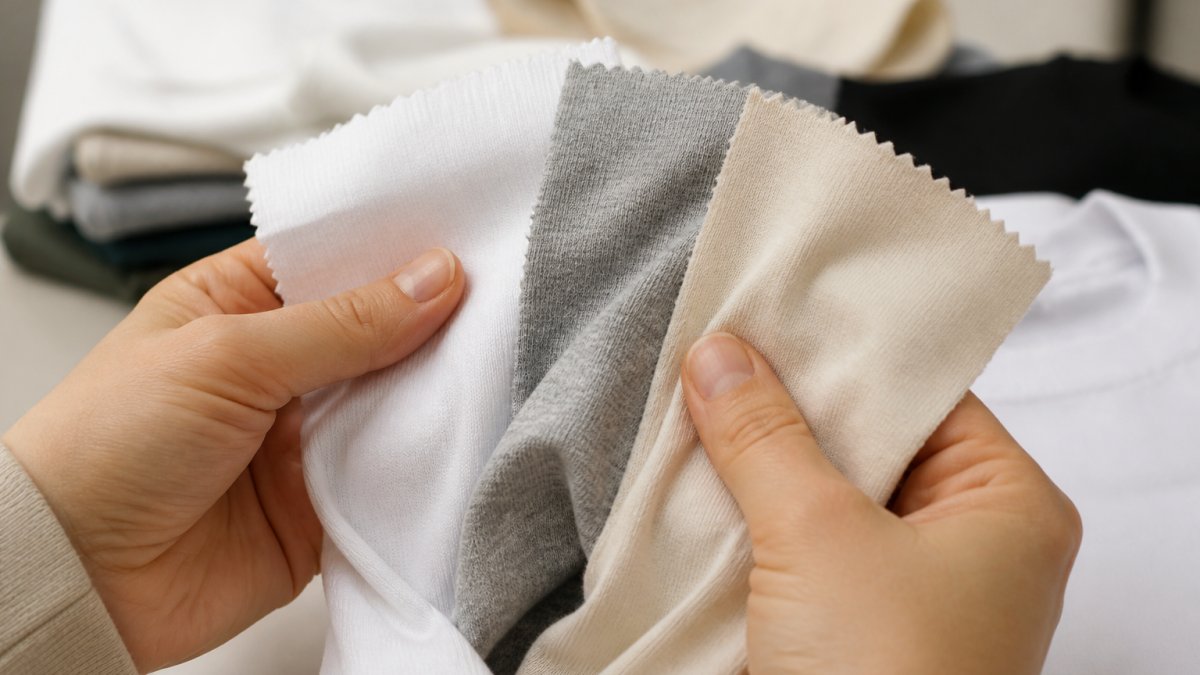
Best GSM for Printed T-Shirts and Durability
GSM (grams per square meter) measures fabric weight and density. In the U.S. market you'll also see ounces per square yard (oz/yd²), and the two aren't interchangeable: roughly 150 GSM is near 4.4 oz/yd², 180 GSM near 5.3 oz/yd², and 200 GSM near 5.9 oz/yd².
Weight is only half the story: yarn construction and knit structure determine how a given GSM behaves under ink.
Here's how weight ranges translate into practical print outcomes:
- Lightweight (roughly 145-160 GSM / 4.3-4.7 oz/yd²): Breathable but thin enough that light shirts show the wearer's silhouette and dark ink can strike through. Prints fade faster because there's less material to anchor ink or dye. Best for summer giveaways and light laundering.
- Mid-weight (roughly 170-190 GSM / 5.0-5.6 oz/yd²): The sweet spot for most custom work, substantial enough to hold a print through repeated washes yet comfortable for everyday wear. Most ring-spun and combed cotton blanks sit here, and screen printing, DTG, and DTF all perform predictably.
- Heavyweight (roughly 200-220+ GSM / 5.9-6.5+ oz/yd²): Durable, with a dense weave that locks ink in place and resists shrinkage, though it can feel stiff and warm. Best for heirloom pieces or shirts washed often; photo-quality and fine-detail designs benefit from the extra surface.
Weight also interacts with print method. DTG on lightweight cotton can look washed-out or "vintage" because ink soaks deep into thin fabric; the same design reads richer on mid-weight or heavyweight cotton. Screen printing on heavyweight fabric needs more ink and a heavier squeegee pass, but survives far more wash cycles.
For most custom printing projects, aim for 170-190 GSM (roughly 5.0-5.6 oz/yd²) for durability without sacrificing comfort. For photo-quality or fine-detail designs, step up to 200+ GSM. On light-colored shirts, prioritize opacity, a heavier weight or interlock knit, over softness.
Fabric Blends and Performance Options
Blends get complicated for custom printing because the cotton-to-polyester-to-rayon ratio changes how each method behaves. A 50/50 and a 65/35 blend look similar on a spec sheet but print, shrink, and feel different.
Cotton-polyester blends combine cotton's comfort with polyester's durability and wrinkle resistance. A 50/50 blend splits the difference; a 65/35 blend (65% cotton, 35% polyester) leans toward comfort.
Blends are versatile, but printing method matters more on blends than on 100% cotton. Here's how the major methods behave:
- Screen printing: Works well on cotton-poly blends, especially 50/50 and 65/35. Plastisol inks adhere reliably to the cotton and, with the right catalyst or low-cure additive, the polyester. The main risk is dye migration on dark polyester-heavy blends; bleed-resistant ink and lower curing temperatures reduce it.
- DTG printing: Best on 100% cotton and high-cotton blends (65/35 or higher cotton). On 50/50 and polyester-heavy blends it needs pretreatment and often a white underbase for opaque colors, and the result feels stiffer and looks less vibrant. On dark blends without pretreatment, DTG often looks faded.
- DTF (direct-to-film) printing: The most blend-friendly method. The design is printed onto film and heat-pressed, so it adheres well to cotton, polyester, and blends alike, ideal when one design must work across a mixed fabric order. The trade-off is a slightly raised, plastic-like hand feel versus DTG on cotton.
- Sublimation: Requires polyester or high-polyester blends, typically 65% polyester or higher. On 50/50 blends the image looks muted because dye only bonds with polyester fibers, and on 100% cotton it doesn't work at all. Choose a high-poly blend or 100% polyester.
- Heat transfer (vinyl and transfer papers): Works on virtually any blend, but adhesion varies. Standard vinyl bonds well on cotton-heavy blends; polyester-heavy blends need low-temperature vinyl to avoid scorching or dye migration. Always test a sample, since the same vinyl behaves differently on 50/50 versus 65/35.
Tri-blend fabrics mix cotton, polyester, and rayon (or bamboo), making them softer than standard blends with a vintage look.
Organic cotton and sustainably sourced materials appeal to environmentally conscious customers. Organic cotton prints much like conventional cotton but costs more; if sustainability is part of your brand story, it reinforces that message. Recycled polyester behaves much like conventional polyester under sublimation and DTF, but verify supply-chain claims against recognized certifications.
| Fabric Type | Best For | Print Method | Durability | Comfort |
|---|---|---|---|---|
| 100% Cotton | Everyday wear, DTG printing | DTG, Screen | Good | Excellent |
| Ring-Spun Cotton | Premium quality, detailed designs | Screen, DTG | Excellent | Excellent |
| 50/50 Blend | Balanced needs, general use | Screen, DTF | Very Good | Good |
| 65/35 Blend | Comfort-focused with durability | Screen, DTG, DTF | Good | Very Good |
| 100% Polyester | Performance wear, sublimation | Sublimation, DTF | Excellent | Fair |
| Tri-Blend | Trendy, vintage look | DTG, DTF | Good | Excellent |
Common Mistakes to Avoid When Choosing T-Shirt Fabric
The biggest mistake is choosing fabric without knowing your printing method. Screen printing, DTG, and sublimation have different fabric requirements, and picking fabric first can result in poor color quality, fading, or prints that don't adhere.
Another common error is assuming heavier always means better. A 220+ GSM shirt might feel premium in hand but uncomfortable in warm weather. Mid-weight fabric (180-200 GSM) delivers durability without the bulk.
Many overlook shrinkage. 100% cotton shrinks, sometimes significantly, in hot water.
Mixing fabric quality with print quality is another trap: a premium print on cheap, thin fabric still looks cheap after a few washes, while a basic print on quality fabric can look good for years.
Finally, don't assume all cotton is the same. Ring-spun and combed cottons produce noticeably better results than open-end cotton, especially for detailed designs or screen printing, and the cost difference is usually small relative to the quality gain.
Conclusion
The best t-shirt fabrics for custom printing depend on your printing method, design complexity, and what customers value most. Cotton remains the safest, most versatile choice for screen printing and DTG. Mid-weight cotton (180-200 GSM) balances durability with comfort, and heavier cotton or polyester blends extend print life for photo printing or maximum durability.
Whether you're creating personalized teacher apparel, family trip commemorations, or wedding gifts, the right fabric ensures your designs look great today and hold up for years. Start with a quality cotton base, confirm your printing method upfront, and test a sample before a full order.
The Textile Exchange's standards for sustainable fabric production
American Apparel's fabric composition and care guidelines
The Sustainable Apparel Coalition's environmental impact assessment for textile production
Frequently Asked Questions
What is the best material for screen printing t-shirts?
100% cotton or cotton-polyester blends work best for screen printing. Cotton absorbs ink well and produces vibrant colors, while blends offer durability and reduced shrinkage. Ringspun cotton is ideal because its smoother surface ensures crisp ink lines and sharp details. Choose 5-6 oz weight cotton for standard prints and 6-7 oz for heavier, all-over designs. Avoid low-quality open-end cotton, which may cause ink bleeding and uneven color.
Which is better for custom printing, 100% polyester or 100% cotton?
For most custom printing projects, 100% cotton is the better choice. It offers superior breathability, comfort, and natural feel that customers prefer. Cotton also holds ink excellently for screen printing and direct-to-garment methods. Polyester excels only for sublimation printing and performance wear. If durability and moisture-wicking matter more than comfort, a 50/50 cotton-polyester blend balances both benefits without sacrificing print quality.
What fabric is best for photo printing on a T-shirt?
Direct-to-garment (DTG) printing works best on 100% cotton or ringspun cotton because the fabric's natural fibers absorb water-based inks evenly, producing photorealistic detail and color accuracy. For sublimation photo printing, use 100% polyester or high-polyester blends (at least 65% polyester). Sublimation requires synthetic fibers to bond with dyes. Avoid heavy GSM fabrics for photo printing; 4.5-5.3 oz cotton allows ink penetration and prevents muddy colors.
What GSM weight should I choose for t-shirts with printed designs?
For printed t-shirts, 5.3 oz (approximately 180 GSM) is the standard sweet spot. It's lightweight enough for comfort and ink absorption, yet durable enough to withstand repeated washing without fading or cracking. For heavier, premium shirts, 6-7 oz (204-237 GSM) works well but requires slightly longer ink cure times. Avoid anything below 4.5 oz, which feels flimsy, or above 7.5 oz, which may cause ink adhesion problems and reduced color vibrancy.